
Under California Probate Code Section 850, the court is granted broad jurisdictional authority to resolve “title” disputes where a decedent died in possession of property claimed by another, or where the estate has a claim to property held by a third party. The “how” of recovery often involves a Section 850 petition—frequently referred to as a Heggstad petition when used to confirm trust assets—to bypass formal probate for omitted property. Evidentiary standards for recovery are rigorous; under Section 859, if a petitioner proves by a “preponderance of the evidence” that property was taken, concealed, or disposed of in bad faith or through undue influence, the court may award double damages. Furthermore, Family Code Section 1100(b) provides the enforcement logic for recovering community property gifted without written consent, as such transfers are voidable by the surviving spouse to the extent of their one-half interest. In San Diego proceedings, the court applies a “clear and convincing” standard when a party seeks to rebut the Form of Title presumption (Evidence Code § 662), requiring a sophisticated nexus between the decedent’s intent and the physical evidence of ownership.
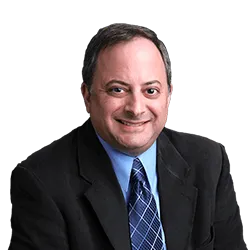
Under California Law, property ownership disputes in an estate context are often resolved through targeted recovery and title-determination procedures rather than informal negotiations. The controlling standard is whether the estate can prove its right to possession or title with documentation that holds up under scrutiny, especially when someone else controls the asset. Legal Basis: Prob. Code § 850.
When ownership is disputed, control is the first asset you lose

I have handled San Diego County estate and trust disputes for more than 35 years, and the most expensive ownership conflicts usually start with one quiet assumption: “title will sort itself out.” In a Mission Hills administration with a brokerage account and a La Jolla residence, a relative produced informal emails and claimed “beneficial ownership,” while the recorded documents pointed elsewhere. California Law treats legal title as a powerful starting point, and shifting that narrative requires disciplined proof, not volume. Legal Basis: Evid. Code § 662. As a CPA, I build valuation discipline into the recovery plan because delay and misclassification can create tax reporting exposure that becomes leverage in the dispute.
Strategic Insight (San Diego): In coastal properties, access delays and maintenance decisions can turn into a control fight overnight, especially when a non-fiduciary is collecting rent or controlling keys. The local nuance is that carrying costs keep running even while everyone argues about “ownership,” and that pressure often pushes bad settlements. The preventative strategy is immediate documentation preservation, a clean chain-of-title analysis, and a controlled recovery petition plan that narrows what must be proven. The practical outcome is faster stabilization of the asset and fewer side disputes over possession. Legal Basis: Prob. Code § 850.
Why San Diego + California Law changes the posture of asset recovery disputes
San Diego ownership disputes often involve real property, layered family arrangements, and financial accounts at local institutions where authority and access are tightly controlled. Community property assumptions can quietly reshape the starting position, especially when spouses used blended funds or informal “we agreed” understandings. Legal Basis: Fam. Code § 760.
- Recorded title and transfer history do not match family expectations
- One person controls keys, passwords, or rent flow while authority is unclear
- Informal notes are treated as “proof” without legally defensible structure
- Carrying costs and property maintenance continue while access is delayed
- Privacy concerns rise as the dispute expands beyond the core ownership issue
The focal point is whether your evidence supports a coherent ownership theory under scrutiny, not whether the story feels fair. This is general information under California Law; specific facts change strategy. When title and control are disputed, the file must be built around admissible documents, consistent timelines, and a clear chain of authority. Legal Basis: Evid. Code § 662.
The CPA advantage is practical: I integrate valuation timing, basis awareness, and transaction classification into the recovery strategy so the ownership posture does not create avoidable tax exposure later. When accounting and title logic align, you keep administrative control and reduce the incentive for opportunistic challenges.
The Immediate 5: the questions that determine whether an ownership dispute can be resolved cleanly
When property ownership and asset recovery are contested, the first questions are about proof, documentation discipline, and timing. My goal is to identify what can be established quickly, what must be reconstructed, and where delay increases carrying costs or hardens positions. This intake frame keeps the dispute focused and prevents the file from turning into an open-ended conflict.
What is the best “anchor document” that proves ownership or the right to recover the asset?
I start with the single document that can carry the most weight: a recorded deed, a trust schedule, a written assignment, or an account registration that shows who owns what. Then I test whether the supporting records are consistent, dated, and reliable, because contradictions invite expanded discovery and delay. A strong anchor does not end the dispute, but it narrows what the other side must overcome.
What relief are you actually seeking: title confirmation, possession, reimbursement, or turnover of records?
Recovery disputes become harder when the requested outcome is vague, because the proof required for each form of relief is different. I define the target early: whether you need an order transferring title, confirming ownership, compelling turnover, or recovering specific property interests. Legal Basis: Prob. Code § 856.
Is there a timing problem that affects leverage, including post-death limitation periods?
In San Diego County disputes, delay often increases carrying costs and can change negotiation posture, particularly when the dispute involves claims tied to a decedent’s rights or obligations. I evaluate the calendar immediately, because missed deadlines can narrow remedies or force a rushed filing posture. Legal Basis: CCP § 366.2.
If spouses are involved, is there a legally valid transmutation or other writing that changes characterization?
Many ownership fights are really characterization fights: separate property versus community, or “we intended” versus “we documented.” If someone claims a property was changed by agreement, I look for the type of writing California requires and whether it was executed with the formality that makes it defensible. Legal Basis: Civ. Code § 852.
Do digital assets, device access, or online accounts control the money flow or proof trail?
Digital access can be the quiet control point: crypto wallets, two-factor authentication, payment apps, and cloud records often determine who can move funds and who can prove what happened. I identify the access map early and preserve records before passwords change or logs disappear, because the proof trail can matter as much as the dollars. Legal Basis: Prob. Code § 870.

When an ownership dispute touches San Diego real property, the practical reality is that costs continue while access is constrained. My focus is building a recovery record that is organized, discreet, and precise so the asset can be stabilized without turning the dispute into a public spectacle.
- Secure records and chain-of-title before positions harden
- Control carrying costs with a documented maintenance plan
- Define the relief requested so proof stays targeted
Procedural realities that shape proof and outcomes in asset recovery disputes
Evidence & Documentation Discipline
Asset recovery disputes are won or lost on record integrity: deeds, escrow files, bank statements, account registrations, and communications that establish authority and timeline. In practice, the documents must be collected and organized in a way that can be authenticated and used, not simply “shown.” Legal Basis: Evid. Code § 1271.
- Transfer documents vs actual control/ownership
- Valuation support vs later audit/challenge risk
- Timeline consistency for planning vs creditor/liability exposure
- Tie to California compliance and defensibility
Where third-party records matter, the strategy must anticipate how documents will be obtained and preserved, including business and financial institution records that cannot be recreated later. Legal Basis: Evid. Code § 1560.
Negotiation vs Transaction-Challenge Reality
Once a transaction is challenged, the discussion shifts from “what everyone intended” to what can be proven and ordered. The relief is often structured around specific asset recovery and title orders, and precision in requested relief becomes the leverage point. Legal Basis: Prob. Code § 856.
- What changes once a transaction is challenged
- Documentation, timing, valuation, compliance posture
- Procedural reality only
Complex Scenarios
Where this becomes relevant is when digital assets and cryptocurrency access planning controls the proof trail, while no-contest clause enforceability boundaries shape how beneficiaries posture their objections. Community property and spousal control issues frequently sit underneath the surface, especially when one spouse managed accounts or devices and the other spouse later asserts a different characterization. Legal Basis: Prob. Code § 21311.
If a spouse’s claim is driving the dispute, the characterization analysis should be documented early so the recovery plan does not rely on assumptions that collapse under scrutiny. Legal Basis: Fam. Code § 760.
Lived experiences from clients who needed privacy and a controlled recovery plan
Antonio R.
“We were dealing with a property that a relative refused to turn over, and every month felt like we were losing control. Steve organized the proof, clarified the path forward, and kept the dispute focused on the real issues. We regained stability and avoided a bigger family blow-up.”
Veronica M.
“The ownership questions were messy, and we were worried about privacy and long-term fallout. Steve built a clean record, explained the risk posture in plain terms, and kept the process disciplined. The practical outcome was clarity and a plan we could follow without constant uncertainty.”
If you are dealing with a property ownership or asset recovery dispute in San Diego County, the safest first step is a structured review of title, authority, and the proof trail so you can decide what to pursue and what to leave alone. My role is to bring documentation discipline and tax-aware clarity to the process so you keep control and reduce avoidable exposure.
California Statutory Framework & Legal Authority
|
Attorney Advertising, Legal Disclosure & Authorship
ATTORNEY ADVERTISING.
This content is provided for general informational and educational purposes only and does not constitute legal, financial, or tax advice.
Under the California Rules of Professional Conduct and State Bar advertising regulations, this material may be considered attorney advertising.
Reading this content does not create an attorney-client relationship or any professional advisory relationship.
Laws vary by jurisdiction and are subject to change, including recent 2026 developments under California’s AB 2016 and evolving federal estate and reporting requirements.
You should consult a qualified attorney or advisor regarding your specific circumstances before taking action.
Responsible Attorney:
Steven F. Bliss, California Attorney (Bar No. 147856).
Local Office:
San Diego Probate Law3914 Murphy Canyon Rd San Diego, CA 92123 (858) 278-2800
San Diego Probate Law is a practice location and trade name used by Steven F. Bliss, Esq., a California-licensed attorney.
About the Author & Legal Review Process
This article was researched and drafted by the Legal Editorial Team of the Law Firm of Steven F. Bliss, Esq.,
a collective of attorneys, legal writers, and paralegals dedicated to translating complex legal concepts into clear, accurate guidance.
Legal Review:
This content was reviewed and approved by Steven F. Bliss, a California-licensed attorney (Bar No. 147856).
Mr. Bliss concentrates his practice in estate planning and estate administration, advising clients on proactive planning strategies and representing fiduciaries in probate and trust administration proceedings when formal court involvement becomes necessary.
With more than 35 years of experience in California estate planning and estate administration,
Mr. Bliss focuses on structuring enforceable estate plans, guiding fiduciaries through court-supervised proceedings,
resolving creditor and notice issues, and coordinating asset management to support compliant, timely distributions and reduce fiduciary risk.
|