
Special Needs Trusts in California are governed by the intersection of federal law (42 U.S.C. § 1396p) and California Probate Code §§ 3600-3613. For court-funded “First-Party” SNTs, Prob. Code § 3604 establishes the enforcement logic, requiring a court determination that the beneficiary has a disability that “substantially impairs” self-care and that the trust assets will not exceed what is “reasonably necessary” for their special needs. Under Prob. Code § 3605, these trusts are subject to a mandatory Medicaid payback provision to the Department of Health Care Services (DHCS) upon the beneficiary’s death. Conversely, “Third-Party” SNTs—typically established by parents—are shielded from state reimbursement claims because the beneficiary never held legal title to the assets. Evidentiary standards for maintaining SSI/Medi-Cal eligibility require the trustee to exercise absolute discretion, as any “right to revoke” or “power to direct” by the beneficiary, per Welf. & Inst. Code § 14006, would classify trust assets as countable resources. Furthermore, AB 2397 (2024) now authorizes court-ordered child support to be paid directly into a SNT to preserve benefits, provided the distribution logic follows strict supplemental-not-duplicative standards.
The single most important rule for special needs planning is simple: do not leave assets directly to the beneficiary when eligibility depends on strict financial limits and reporting. Under California Law, a properly drafted trust can hold and administer resources with controlled distributions, and court-established special needs trust authority is addressed in Probate Code § 3604. The planning goal is administrative control and documentation discipline, so support is delivered without creating avoidable eligibility exposure.
Building a Planning Structure That Protects Benefits and Preserves Family Control

For more than 35 years, I have guided San Diego families through special needs planning where the focal point is stability: benefits protection, private administration, and clear authority if a transfer is challenged. In one La Jolla matter, parents owned a primary residence and a small commercial interest, and they wanted support available for therapies, technology, and supplemental care without putting eligibility at risk. Under California Law, the first compliance step is a valid trust instrument and aligned titles, consistent with Probate Code § 15200. As a CPA, I add valuation discipline and basis awareness so funding decisions and later accounting remain defensible and orderly.
Strategic Insight (San Diego): In Mission Hills, the family had the right intent but the wrong mechanics: a well-meaning relative paid vendors directly from a joint account, creating muddled records and privacy concerns. The preventative step was to route support through one trustee-managed system with consistent documentation and a predictable monthly cadence. The practical result was cleaner reporting, fewer misunderstandings inside the family, and less administrative friction during reviews.
Why San Diego Realities and California Law Change the Planning Outcome
In San Diego County, planning pressure comes from real-world logistics: carrying costs for property, access delays when accounts are frozen, and the administrative burden of keeping clean records for benefit renewals. California Law places fiduciary weight on the trustee’s conduct, and the duty of loyalty and beneficiary-first administration under Probate Code § 16002 is the basis for how a special needs trust should operate day to day, especially when privacy matters.
- Direct gifts or inheritances that create avoidable eligibility exposure.
- Unfunded trusts where the paperwork exists but control does not.
- Family members paying expenses informally, creating inconsistent records.
- Real property upkeep and maintenance obligations that require predictable liquidity.
- Unclear successor decision-making when a parent is unavailable.
If a disagreement emerges, the planning file becomes the evidence. Documentation discipline, clear distribution standards, and a defined process for information sharing reduce friction, and California provides a structured forum to interpret and enforce trust terms under Probate Code § 17200, which matters when family dynamics shift or third parties question authority.
As an attorney and CPA, I focus on governance: funding mechanics, valuation support, and basis awareness so later reporting is organized and the long-term posture remains coherent. This is general information under California Law; specific facts change strategy.
The Immediate 5: Questions that determine whether support stays protected and defensible
These are the first intake questions I ask when a family wants to protect benefits while still providing meaningful, flexible support. They force clarity on authority, funding, documentation, and timing. The goal is to build a structure that functions quietly in the background, not one that creates avoidable scrutiny.
Practitioner’s Note: In Rancho Santa Fe, a parent had drafts on a laptop and informal notes shared with a banker, but no executed trust and no coordinated beneficiary updates at a local SDCCU account. The diagnostic signal was that there was no legally recognizable trust creation event. The corrective move was to execute and fund a compliant trust under Probate Code § 15200 before any new assets were directed to the beneficiary.
Will any asset pass directly to the beneficiary, even for a moment?
If an inheritance, settlement, or beneficiary designation pays directly to the individual, the funds can be treated as available support and trigger reporting and eligibility problems. The planning discipline is to direct assets into a properly structured special needs trust, including the court-established pathway described in Probate Code § 3604, so distributions are controlled and documented. Connection: The authority to hold assets in trust only works if administration follows fiduciary loyalty principles under Probate Code § 16002, which is what keeps day-to-day decisions defensible.
Who is the trustee, and what information discipline will keep administration clean?
Trustee selection is not about personality; it is about process, record integrity, and the ability to say “no” consistently. Under Probate Code § 16060, trustees have a duty to keep beneficiaries reasonably informed, and the trust should define how requests, receipts, and decisions are documented to avoid informal cash handling. Connection: Clear information practices reinforce reliable records that support later verification under Evidence Code § 1271.
What specific expenses will be paid, and what expenses should never be paid directly?
A defensible plan distinguishes supplemental support from payments that create confusion or unintended consequences. The trust should specify categories such as therapies, adaptive technology, transportation, and quality-of-life support, while also defining what requires trustee review, written invoices, and consistent timing so the family is not improvising during a review.
Are beneficiary designations and account titles aligned with the trust structure?
Most plan failures come from misalignment: retirement accounts, life insurance, and payable-on-death designations that bypass the carefully drafted trust. The corrective step is to retitle and redesignate so assets flow to the trustee, not to the individual, and so successor trustees can act immediately without access delays.
If you are unavailable, what written guidance exists for care, advocacy, and decision-making?
A special needs plan should include practical guidance that survives the parents: routines, providers, communication needs, housing preferences, and a clear governance map for decision-makers. When guidance is written and updated, trustees and caregivers can act with consistency and discretion instead of relying on fragmented family memory.

In San Diego, the best special needs plans anticipate ordinary friction: property maintenance bills, vendor payment timing, and periods where a successor trustee needs access without delay. The paired work is quiet but precise: consolidate authority, document distributions, and keep liquidity predictable. If a transfer is challenged later, the file should show consistent governance, not improvised decisions.
Procedural Realities That Keep Special Needs Planning Defensible
Evidence & Documentation Discipline
The strongest plans are the ones that can be understood years later by someone who did not live through the drafting meetings. Record integrity matters, and business records standards under Evidence Code § 1271 are a practical model for how trustees should maintain invoices, receipts, and decision notes.
- Transfer documents vs actual control and titling.
- Valuation support vs later audit or challenge risk.
- Timeline consistency for planning vs creditor or liability exposure.
- Tie to California compliance and defensibility.
When distributions are made, the trustee should be able to explain the basis, the purpose, and the documentation trail, consistent with fiduciary loyalty and beneficiary-first administration under Probate Code § 16002.
Negotiation vs Transaction-Challenge Reality
If a family member questions the trustee’s decisions, or if a third party challenges whether the trust is being followed, the posture shifts from “what we meant” to “what the instrument authorizes.” California recognizes a structured process for interpreting and enforcing trust terms under Probate Code § 17200, which is why the drafting file, funding proof, and distribution records must be coherent.
- Authority is measured against the written instrument.
- Documentation, timing, valuation, and compliance posture dominate.
- Procedural reality only, not personal narratives.
Complex Scenarios
Digital assets and cryptocurrency access planning should be built into trustee authority, because a wallet without lawful access is functionally unavailable support. California’s digital asset fiduciary access framework begins at Probate Code § 870, and it should be paired with practical credential management and a documented access protocol.
Where this becomes relevant is when a family is trying to preserve the plan’s long-term posture while avoiding internal conflict: no-contest clause enforceability boundaries under Probate Code § 21311 must be drafted with precision, and community property control under Family Code § 760 should be addressed so spousal authority and funding decisions do not collide with trust administration.
Lived Experiences
Lance A.
“We came in scared that helping our child would accidentally jeopardize benefits. Steve rebuilt our plan so money flowed through one controlled system, and he showed us how to document decisions without turning our lives into paperwork. The outcome was real clarity and a calmer family dynamic.”
Colleen W.
“Our biggest obstacle was that we had pieces everywhere: insurance, retirement accounts, and a trust we never funded. Steve organized the structure, aligned the designations, and gave our successor trustee a practical roadmap. We left feeling privacy was preserved and governance was finally stable.”
Clarify Authority Now So Support Stays Protected Later
Special needs planning is not about complexity for its own sake; it is about control, documentation discipline, and quiet continuity. A focused review can align trust authority, beneficiary designations, and funding mechanics so support is delivered consistently without avoidable eligibility exposure or family conflict.
California Statutory Framework & Legal Authority
|
Attorney Advertising, Legal Disclosure & Authorship
ATTORNEY ADVERTISING.
This content is provided for general informational and educational purposes only and does not constitute legal, financial, or tax advice.
Under the California Rules of Professional Conduct and State Bar advertising regulations, this material may be considered attorney advertising.
Reading this content does not create an attorney-client relationship or any professional advisory relationship.
Laws vary by jurisdiction and are subject to change, including recent 2026 developments under California’s AB 2016 and evolving federal estate and reporting requirements.
You should consult a qualified attorney or advisor regarding your specific circumstances before taking action.
Responsible Attorney:
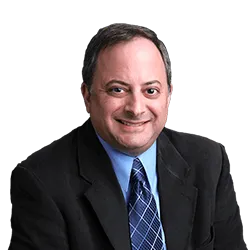
Steven F. Bliss, California Attorney (Bar No. 147856).
Local Office:
San Diego Probate Law3914 Murphy Canyon Rd San Diego, CA 92123 (858) 278-2800
San Diego Probate Law is a practice location and trade name used by Steven F. Bliss, Esq., a California-licensed attorney.
About the Author & Legal Review Process
This article was researched and drafted by the Legal Editorial Team of the Law Firm of Steven F. Bliss, Esq.,
a collective of attorneys, legal writers, and paralegals dedicated to translating complex legal concepts into clear, accurate guidance.
Legal Review:
This content was reviewed and approved by Steven F. Bliss, a California-licensed attorney (Bar No. 147856).
Mr. Bliss concentrates his practice in estate planning and estate administration, advising clients on proactive planning strategies and representing fiduciaries in probate and trust administration proceedings when formal court involvement becomes necessary.
With more than 35 years of experience in California estate planning and estate administration,
Mr. Bliss focuses on structuring enforceable estate plans, guiding fiduciaries through court-supervised proceedings,
resolving creditor and notice issues, and coordinating asset management to support compliant, timely distributions and reduce fiduciary risk.
|