

Creating A Structured Transition Of Authority Before And After Incapacity?
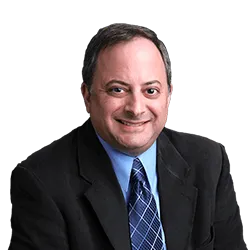
A comprehensive estate plan isn’t merely about distributing assets after you’re gone; it’s about ensuring a seamless transition of authority if you become unable to manage your affairs. This is where experienced estate planning attorney guidance from an attorney is essential. Without a well-defined plan, your loved ones could face significant legal hurdles, financial strain, and emotional distress.
A structured estate planning framework addresses these vulnerabilities by establishing clear protocols for both financial and healthcare decisions.
What happens if I become incapacitated without a power of attorney?

Without a valid power of attorney, your family will likely need to petition the court for conservatorship. This is a public process that requires demonstrating your incapacity to a judge. The court will appoint a conservator to manage your finances and potentially your personal care. This process can be time-consuming, expensive, and emotionally draining. A properly drafted power of attorney, however, allows you to designate a trusted individual to act on your behalf immediately, avoiding the court intervention and associated costs.
How can I ensure my successor trustee can access my digital assets?
Digital assets – online accounts, cryptocurrency, social media profiles – often require specific access protocols. A general power of attorney typically won’t suffice. Your estate planning documents must include specific “RUFADAA disclosure” language, referencing the Revised Uniform Fiduciary Access to Digital Assets Act (Probate Code § 870), to legally authorize your Successor Trustee to access these accounts. Without this, custodians like Google or Coinbase may block access, even with a court order.
What are the key differences between a healthcare directive and a POLST form?
A healthcare directive (also known as an advance healthcare directive) outlines your general wishes regarding medical treatment. A Physician Orders for Life-Sustaining Treatment (POLST) form, on the other hand, is a medical order signed by your physician, specifying your preferences for life-sustaining treatments in an emergency. California’s Confidentiality of Medical Information Act (CMIA) is stricter than federal HIPAA, requiring specific CMIA waivers to ensure your Successor Trustee can obtain the physician certifications necessary to trigger their authority without court intervention.
What should I consider when choosing a successor trustee?
Selecting a successor trustee is a critical decision. Choose someone you trust implicitly, who is organized, responsible, and capable of handling financial matters. Consider their geographic proximity, potential conflicts of interest, and willingness to fulfill the role. It’s also wise to name a co-trustee or alternate trustee in case your first choice is unable or unwilling to serve.
How often should I review and update my estate plan?
Life changes – marriage, divorce, birth of a child, significant asset fluctuations – necessitate a review of your estate plan. At a minimum, review your documents every three to five years, or whenever there’s a major life event. Regular updates ensure your plan reflects your current wishes and complies with evolving laws.
What is a pour-over will and how does it function?
A pour-over will is a safety net for assets not formally titled in your trust. It directs any assets remaining outside the trust at your death to be “poured over” into the trust. This prevents those assets from going through probate. However, it’s important to note that assets passing through a pour-over will are subject to probate before being transferred to the trust.
What are spendthrift provisions and how can they protect my beneficiaries?
Spendthrift provisions protect your beneficiaries’ inheritance from creditors and potential mismanagement. They restrict their ability to assign or sell their inheritance, preventing them from squandering it on frivolous expenses or losing it to lawsuits. These provisions are particularly valuable if you have beneficiaries with financial challenges or a history of poor decision-making.
How does the step-up in basis work for inherited assets?
The step-up in basis allows beneficiaries to inherit assets at their fair market value on the date of the decedent’s death, potentially reducing capital gains taxes when the assets are sold. However, this benefit only applies to assets that receive a step-up in basis, and retirement accounts do NOT receive a step-up. Understanding the distinction between assets that qualify for a step-up and those that don’t is crucial for tax planning.
What is Medi-Cal recovery and how can it impact my estate?
Medi-Cal recovery allows the state of California to recoup costs paid for long-term care services from the deceased’s estate. This can include selling assets to reimburse Medi-Cal. Planning ahead, such as establishing an irrevocable trust, can help protect assets from Medi-Cal recovery.
What are the benefits of naming guardians for minor children in my estate plan?
If you have minor children, naming guardians in your estate plan ensures their care and upbringing are handled according to your wishes if you become incapacitated or deceased. This provides peace of mind knowing your children will be protected by individuals you trust.
What are exclusionary clauses and how can they be used in disinheritance protocols?
Exclusionary clauses explicitly disinherit specific individuals from your estate. While legally permissible, these clauses can be challenged if not drafted carefully. It’s essential to clearly state your intent and provide a valid reason for the disinheritance to minimize the risk of a legal dispute.
How durable does my power of attorney need to be?
A durable power of attorney remains in effect even if you become incapacitated. However, it’s crucial to specify whether it’s immediate (effective immediately upon signing) or springing (effective upon a specific event, such as a doctor’s determination of incapacity). A springing power of attorney requires additional documentation to prove your incapacity, potentially delaying access to funds.
After 35+ years of practice as an estate planning attorney and CPA in San Diego, California, I’ve seen firsthand the devastating consequences of inadequate planning. A CPA-attorney can integrate tax strategy, evaluating asset titling conflicts, and advising on capital gains and valuation to ensure your estate plan is not only legally sound but also tax-efficient.
|
Attorney Advertising, Legal Disclosure & Authorship
ATTORNEY ADVERTISING.
This content is provided for general informational and educational purposes only and does not constitute legal, financial, or tax advice.
Under the California Rules of Professional Conduct and State Bar advertising regulations, this material may be considered attorney advertising.
Reading this content does not create an attorney-client relationship or any professional advisory relationship.
Laws vary by jurisdiction and are subject to change, including recent 2026 developments under California’s AB 2016 and evolving federal estate and reporting requirements.
You should consult a qualified attorney or advisor regarding your specific circumstances before taking action.
Responsible Attorney:
Steven F. Bliss, California Attorney (Bar No. 147856).
Local Office:
San Diego Probate Law3914 Murphy Canyon Rd San Diego, CA 92123 (858) 278-2800
San Diego Probate Law is a practice location and trade name used by Steven F. Bliss, Esq., a California-licensed attorney.
About the Author & Legal Review Process
This article was researched and drafted by the Legal Editorial Team of the Law Firm of Steven F. Bliss, Esq.,
a collective of attorneys, legal writers, and paralegals dedicated to translating complex legal concepts into clear, accurate guidance.
Legal Review:
This content was reviewed and approved by Steven F. Bliss, a California-licensed attorney (Bar No. 147856).
Mr. Bliss concentrates his practice in estate planning and estate administration, advising clients on proactive planning strategies and representing fiduciaries in probate and trust administration proceedings when formal court involvement becomes necessary.
With more than 35 years of experience in California estate planning and estate administration,
Mr. Bliss focuses on structuring enforceable estate plans, guiding fiduciaries through court-supervised proceedings,
resolving creditor and notice issues, and coordinating asset management to support compliant, timely distributions and reduce fiduciary risk.
|