

Ensuring Continuity Of Bill Payments Taxes And Financial Operations?
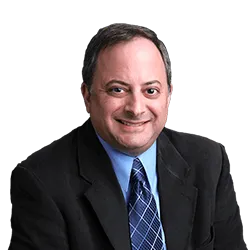
Protecting your financial legacy requires more than just a will. It demands a proactive strategy that addresses ongoing bill payments, tax obligations, and the seamless continuation of your financial operations. An experienced estate planning attorney can help you navigate these complexities and ensure your wishes are carried out without unnecessary disruption. A comprehensive estate planning strategy is essential for avoiding these pitfalls.
A well-structured estate planning framework considers not only the distribution of assets after your death but also the management of those assets during your lifetime, especially in the event of incapacity. This includes establishing durable powers of attorney, healthcare directives, and a clear plan for who will handle your financial affairs. Without these safeguards, even a substantial estate can be quickly depleted by avoidable expenses and administrative hurdles.
Over the past 35+ years, I’ve seen firsthand how a lack of proactive planning can devastate families. As both an Estate Planning Attorney and a CPA, I understand the intricate interplay between legal and tax considerations. This dual perspective allows me to create plans that minimize tax liabilities, maximize asset preservation, and ensure a smooth transition for your heirs. The CPA advantage lies in understanding the step-up in basis rules, capital gains implications, and the importance of accurate asset valuation.
What happens to my bills if I become incapacitated and can’t pay them?

If you become incapacitated without a properly executed durable power of attorney, accessing funds to pay your bills becomes significantly more complicated. Family members may need to pursue a conservatorship through the courts, a process that can be time-consuming, expensive, and emotionally draining. A durable power of attorney designates a trusted agent to manage your finances on your behalf, allowing them to pay bills, make deposits, and handle other financial matters without court intervention.
In California, a durable power of attorney must meet specific requirements to be valid. It must be signed and witnessed, and it should clearly outline the scope of your agent’s authority. It’s also crucial to consider a springing power of attorney, which only becomes effective upon a specific event, such as a doctor’s determination of your incapacity.
How can I ensure my taxes are filed and paid correctly after my death?
Tax obligations don’t simply disappear upon death. A final income tax return must be filed for the deceased, and an estate tax return may be required if the estate exceeds the federal exemption threshold. An experienced estate planning attorney can work with your CPA to ensure all necessary tax filings are made accurately and on time, avoiding costly penalties and interest.
Furthermore, the beneficiaries of inherited assets may have their own tax obligations, depending on the type of asset and how it’s distributed. Understanding the tax implications of inheritance is crucial for both the estate and the heirs.
What is the role of a successor trustee in managing my financial affairs?
A successor trustee is designated in your trust to manage your assets after your death or incapacity. Their primary duty is to administer the trust according to your instructions, which includes paying bills, distributing assets to beneficiaries, and filing tax returns. The transition of authority to a successor trustee can be seamless if the trust is properly funded and the successor trustee is prepared to assume their responsibilities.
However, a poorly funded trust or an unprepared successor trustee can lead to delays, disputes, and unnecessary expenses. It’s essential to choose a trustworthy and capable successor trustee and provide them with clear instructions and access to all relevant financial information.
How do I protect my digital assets in my estate plan?
Digital assets, such as online bank accounts, social media accounts, and cryptocurrency, are often overlooked in traditional estate planning. However, these assets can represent a significant portion of your net worth. Without a specific plan for accessing and managing your digital assets, your heirs may be unable to recover them.
California’s RUFADAA (Revised Uniform Fiduciary Access to Digital Assets Act) provides a framework for accessing digital assets after death, but it requires specific language in your will or trust. An estate planning attorney can help you draft the necessary provisions to ensure your digital legacy is protected.
What is a pour-over will and how does it fit into my estate plan?
A pour-over will is a safety net that ensures any assets not already titled in your trust are transferred to the trust upon your death. It’s a valuable tool for avoiding probate and ensuring a smooth transition of assets. However, it’s important to understand that assets transferred through a pour-over will may be subject to probate before being transferred to the trust.
The effectiveness of a pour-over will depends on the proper funding of your trust. It’s essential to regularly review your trust and ensure all your assets are titled correctly to maximize its benefits.
|
Attorney Advertising, Legal Disclosure & Authorship
ATTORNEY ADVERTISING.
This content is provided for general informational and educational purposes only and does not constitute legal, financial, or tax advice.
Under the California Rules of Professional Conduct and State Bar advertising regulations, this material may be considered attorney advertising.
Reading this content does not create an attorney-client relationship or any professional advisory relationship.
Laws vary by jurisdiction and are subject to change, including recent 2026 developments under California’s AB 2016 and evolving federal estate and reporting requirements.
You should consult a qualified attorney or advisor regarding your specific circumstances before taking action.
Responsible Attorney:
Steven F. Bliss, California Attorney (Bar No. 147856).
Local Office:
San Diego Probate Law3914 Murphy Canyon Rd San Diego, CA 92123 (858) 278-2800
San Diego Probate Law is a practice location and trade name used by Steven F. Bliss, Esq., a California-licensed attorney.
About the Author & Legal Review Process
This article was researched and drafted by the Legal Editorial Team of the Law Firm of Steven F. Bliss, Esq.,
a collective of attorneys, legal writers, and paralegals dedicated to translating complex legal concepts into clear, accurate guidance.
Legal Review:
This content was reviewed and approved by Steven F. Bliss, a California-licensed attorney (Bar No. 147856).
Mr. Bliss concentrates his practice in estate planning and estate administration, advising clients on proactive planning strategies and representing fiduciaries in probate and trust administration proceedings when formal court involvement becomes necessary.
With more than 35 years of experience in California estate planning and estate administration,
Mr. Bliss focuses on structuring enforceable estate plans, guiding fiduciaries through court-supervised proceedings,
resolving creditor and notice issues, and coordinating asset management to support compliant, timely distributions and reduce fiduciary risk.
|