How Do I Properly Revoke A Will In California Physical Acts Vs Subsequent Instruments?

Revoking a will in California requires strict adherence to legal formalities. A will, once properly executed, is a serious legal document, and simply changing your mind isn’t enough to invalidate it. An experienced wills attorney can guide you through the proper procedures to ensure your wishes are honored and to avoid costly probate disputes. The process of updating or revoking a will is often intertwined with a broader estate planning strategy, and it’s critical to consider the implications for all your assets and beneficiaries.
A comprehensive estate planning strategy ensures your assets are distributed according to your wishes, minimizes tax liabilities, and protects your loved ones.
Can I revoke my will by physically destroying it?
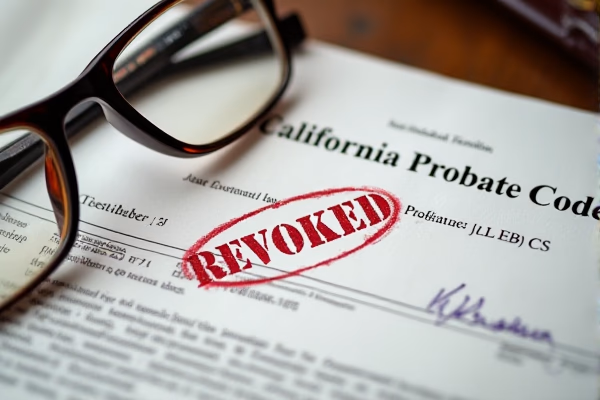
Yes, you can revoke a will by physically destroying it. However, California law requires a specific intent to revoke. Simply losing or misplacing your will does not constitute a revocation. To legally revoke a will through physical acts, you must demonstrate that you intentionally and completely destroyed the document with the purpose of canceling it. This could involve burning it, tearing it up, or otherwise rendering it unusable. It’s important to have witnesses present during the destruction, although not legally required, to corroborate your intent.
What is the difference between revoking a will with a physical act versus a subsequent instrument?
Revoking a will with a physical act means destroying the original document, as discussed above. Revoking a will with a subsequent instrument involves creating a new will or a codicil that explicitly states your intention to revoke the prior will. A codicil must be executed with the same formalities as a will – two simultaneous witnesses are required. A subsequent will automatically revokes any prior wills to the extent of its inconsistencies. However, a codicil legally “republishes” the entire original Will as of the date the codicil is signed, which can reset statutory timelines for omitted heirs or tax law changes.
What if I only cross out a name on my will? Is that a valid revocation?
No, crossing out a name on your will is generally not a valid revocation. Partial revocation by physical act is legally risky and often deemed invalid in California. The courts typically require complete destruction of the will to establish intent. Attempting to modify a will without proper execution can lead to unintended consequences and potential legal challenges. An attorney-led will drafting counsel can ensure your testamentary drafting strategy is legally sound and avoids these pitfalls.
What happens if I revoke my will and then die before creating a new one?
If you revoke your will and die before executing a new one, you will die “intestate.” This means your assets will be distributed according to California’s intestate succession laws, which may not align with your wishes. These laws dictate who inherits your property based on your family relationships. It’s crucial to understand that a revoked will has no legal effect, and you must create a valid replacement will to control the distribution of your estate.
Can a beneficiary contest the revocation of a will?
Yes, a beneficiary can contest the revocation of a will. Common grounds for a contest include challenging the testator’s capacity at the time of revocation or alleging undue influence. If a beneficiary believes the revocation was not validly executed or was the result of coercion, they can file a lawsuit to challenge it. A wills attorney analyzing statutory validity can help you anticipate potential contest risks and take steps to minimize them.
What is Dependent Relative Revocation?
Under the DRR doctrine, if a testator revokes an old Will based on the mistaken belief that a new Will is valid, the court may “undo” the revocation of the old Will if the new one fails. This prevents an estate from falling into intestacy due to a technical drafting error. For example, if you destroy your original will believing a new one is properly signed, but the new will has a defect, the court may reinstate the original will.
What are the requirements for a valid will in California?
A valid will in California must meet specific requirements. It must be in writing, signed by the testator (the person making the will), and witnessed by two simultaneous witnesses. The testator must be of sound mind and understand the nature of the act, their assets, and their relations at the exact moment of execution. California uses a low legal threshold for capacity; the testator only needs to understand the nature of the act, their assets, and their relations at the exact moment of execution.
What is undue influence and how can it affect a will?
Undue influence occurs when someone exerts excessive pressure on a testator to make a will that benefits them. California uses a “Four-Prong Test” to identify undue influence: victim vulnerability, influencer authority, tactics used, and result inequity. Gifts to non-family caregivers are legally presumed fraudulent. If a court finds undue influence, the will can be invalidated.
What is a no-contest clause in a will?
A no-contest clause, also known as an in terrorem clause, discourages beneficiaries from challenging a will. However, a no-contest clause is only enforceable against contests brought without probable cause. If a beneficiary has reasonable facts to believe a Will is invalid, they may contest without forfeiting their inheritance.
What if I own a home and want to transfer it to my children after my death?
As of April 1, 2025, a primary residence up to $750,000 can bypass formal probate via a “Petition to Determine Succession” (Form DE-315). Distinguish between the Small Value Affidavit and the AB 2016 Succession Petition. This streamlined process allows for a quicker and less expensive transfer of ownership. However, it’s important to understand the specific requirements and limitations of this procedure.
|
Attorney Advertising, Legal Disclosure & Authorship
ATTORNEY ADVERTISING.
This content is provided for general informational and educational purposes only and does not constitute legal, financial, or tax advice.
Under the California Rules of Professional Conduct and State Bar advertising regulations, this material may be considered attorney advertising.
Reading this content does not create an attorney-client relationship or any professional advisory relationship.
Laws vary by jurisdiction and are subject to change, including recent 2026 developments under California’s AB 2016 and evolving federal estate and reporting requirements.
You should consult a qualified attorney or advisor regarding your specific circumstances before taking action.
Responsible Attorney:
Steven F. Bliss, California Attorney (Bar No. 147856).
Local Office:
San Diego Probate Law3914 Murphy Canyon Rd San Diego, CA 92123 (858) 278-2800
San Diego Probate Law is a practice location and trade name used by Steven F. Bliss, Esq., a California-licensed attorney.
About the Author & Legal Review Process
This article was researched and drafted by the Legal Editorial Team of the Law Firm of Steven F. Bliss, Esq.,
a collective of attorneys, legal writers, and paralegals dedicated to translating complex legal concepts into clear, accurate guidance.
Legal Review:
This content was reviewed and approved by Steven F. Bliss, a California-licensed attorney (Bar No. 147856).
Mr. Bliss concentrates his practice in estate planning and estate administration, advising clients on proactive planning strategies and representing fiduciaries in probate and trust administration proceedings when formal court involvement becomes necessary.
With more than 35 years of experience in California estate planning and estate administration,
Mr. Bliss focuses on structuring enforceable estate plans, guiding fiduciaries through court-supervised proceedings,
resolving creditor and notice issues, and coordinating asset management to support compliant, timely distributions and reduce fiduciary risk.
|