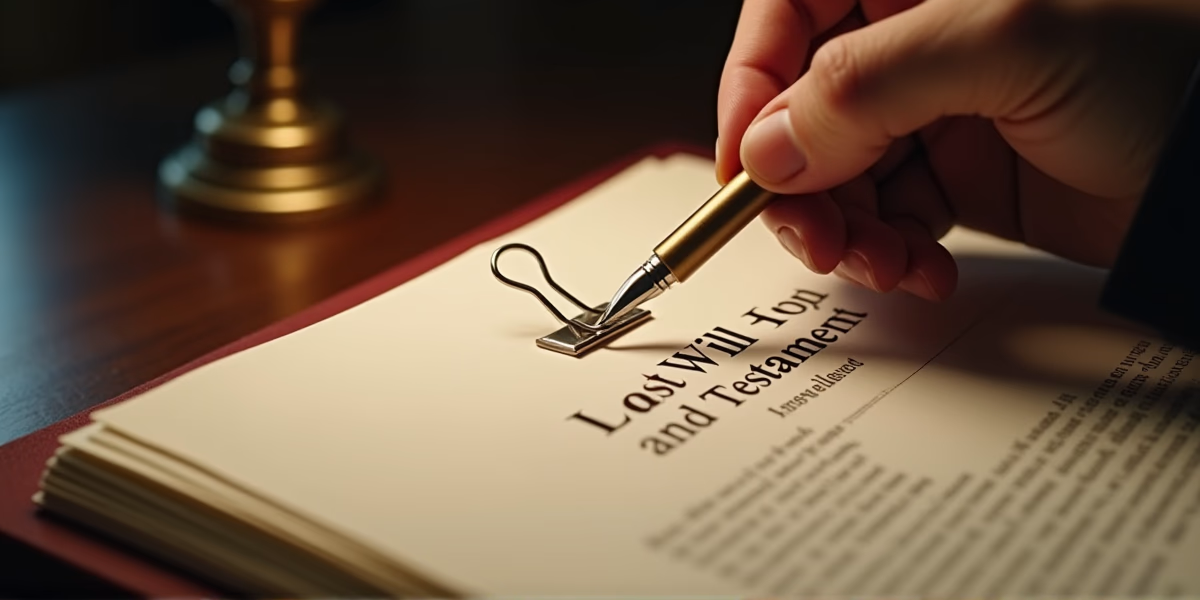
The Danger Of Handwriting Changes On A Typed Will Material Provision Violations?

A will, while a powerful tool for estate planning, is surprisingly vulnerable to challenges if not executed with strict adherence to California law. Even a seemingly insignificant handwritten change can jeopardize its validity. This is because California Probate Code dictates specific requirements for amending a will, and failing to meet those requirements can lead to the will being deemed unenforceable. An experienced wills attorney can help you navigate these complexities and ensure your testamentary wishes are legally sound. Proper estate planning goes beyond simply creating a will; it requires a comprehensive estate planning strategy that addresses potential pitfalls and ensures a smooth transfer of assets.
The core issue lies in the concept of “material provisions.” These are the essential elements of a will – who receives what, who is the executor, and so on. Any alteration to a material provision must be executed with the same level of formality as the original will. This means it must be witnessed by two disinterested parties, present at the same time as the testator (the person making the will) signs the change. Simply crossing something out and writing something else, even with a signature, is generally insufficient under California law.
I’ve practiced estate planning law in San Diego for over 35 years, and I’ve seen countless cases where well-intentioned individuals have inadvertently invalidated their wills due to improper amendments. The CPA advantage in these situations is critical. We can analyze the tax implications of any changes, ensuring that beneficiaries receive the maximum benefit of a step-up in basis for inherited assets and minimizing capital gains taxes. A thorough valuation of assets is also essential to avoid potential disputes with the IRS or the California Franchise Tax Board.
What happens if I cross something out on my will?

If you cross something out on your will without properly re-executing it with two witnesses, the crossed-out portion is likely considered void. However, the validity of the rest of the will becomes questionable. A court may interpret the change as an attempt to revoke the entire document, especially if the alteration is substantial. This can lead to the will being declared invalid, and your assets distributed according to California’s intestacy laws – which may not align with your wishes.
Furthermore, even if the court doesn’t deem the entire will invalid, the handwritten change itself is unlikely to be enforced. This can create ambiguity and disputes among beneficiaries, leading to costly litigation. It’s always best to err on the side of caution and execute any changes to your will with the same level of formality as the original document.
Can I use a codicil to make changes to my will?
A codicil is a separate document specifically designed to amend an existing will. It must be executed with the same formalities as a will – meaning it requires two simultaneous witnesses. A codicil is a legally sound way to make changes to your will without having to rewrite the entire document. However, it’s important to remember that a codicil “republishes” the entire original will, which can reset statutory timelines for omitted heirs or tax law changes. Cite Probate Code § 6110 and the Republication Doctrine.
What if I only want to change the executor of my will?
Changing the executor of your will requires the same level of formality as any other material change. You cannot simply cross out the old executor’s name and write in a new one. You must execute a new will or a codicil with two witnesses. Failing to do so can invalidate the change and potentially lead to disputes over who is legally authorized to administer your estate.
What is the risk of a will contest if I make improper changes?
Improperly executed changes to your will significantly increase the risk of a will contest. Disgruntled beneficiaries may challenge the validity of the will, arguing that the changes were not made in accordance with California law. This can lead to costly litigation and delays in the distribution of your assets. A attorney-led will drafting counsel can help you minimize this risk by ensuring your will is drafted and executed in compliance with all applicable laws.
What if I made changes to my will before April 1, 2025?
The rules regarding will execution and amendment in California are constantly evolving. As of April 1, 2025, a primary residence up to $750,000 can bypass formal probate via a “Petition to Determine Succession” (Form DE-315). However, this does not change the requirements for properly executing a will or any amendments. Any changes made before this date must still comply with the laws in effect at the time of the change. Distinguish between the Small Value Affidavit and the AB 2016 Succession Petition.
|
Attorney Advertising, Legal Disclosure & Authorship
ATTORNEY ADVERTISING.
This content is provided for general informational and educational purposes only and does not constitute legal, financial, or tax advice.
Under the California Rules of Professional Conduct and State Bar advertising regulations, this material may be considered attorney advertising.
Reading this content does not create an attorney-client relationship or any professional advisory relationship.
Laws vary by jurisdiction and are subject to change, including recent 2026 developments under California’s AB 2016 and evolving federal estate and reporting requirements.
You should consult a qualified attorney or advisor regarding your specific circumstances before taking action.
Responsible Attorney:
Steven F. Bliss, California Attorney (Bar No. 147856).
Local Office:
San Diego Probate Law3914 Murphy Canyon Rd San Diego, CA 92123 (858) 278-2800
San Diego Probate Law is a practice location and trade name used by Steven F. Bliss, Esq., a California-licensed attorney.
About the Author & Legal Review Process
This article was researched and drafted by the Legal Editorial Team of the Law Firm of Steven F. Bliss, Esq.,
a collective of attorneys, legal writers, and paralegals dedicated to translating complex legal concepts into clear, accurate guidance.
Legal Review:
This content was reviewed and approved by Steven F. Bliss, a California-licensed attorney (Bar No. 147856).
Mr. Bliss concentrates his practice in estate planning and estate administration, advising clients on proactive planning strategies and representing fiduciaries in probate and trust administration proceedings when formal court involvement becomes necessary.
With more than 35 years of experience in California estate planning and estate administration,
Mr. Bliss focuses on structuring enforceable estate plans, guiding fiduciaries through court-supervised proceedings,
resolving creditor and notice issues, and coordinating asset management to support compliant, timely distributions and reduce fiduciary risk.
|