
Incapacity determination is governed by California Probate Code § 810-813 (Due Process in Competence Determinations Act), which establishes a rebuttable presumption of capacity[cite: 84, 92]. Trusts bypass court-supervised conservatorships by empowering a successor trustee under § 15600 once a triggering event—defined in the instrument—occurs[cite: 1104, 1120]. Evidentiary standards typically require “clear and convincing” medical evidence of a deficit in mental functions that significantly impairs the ability to manage financial resources or provide for personal care per § 811[cite: 85, 103].
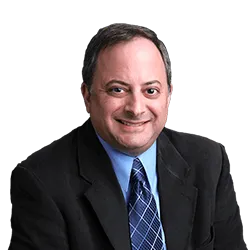
Trust-based incapacity planning is governance: you define how authority shifts, what proof is required, and what privacy boundaries apply. Capacity questions in California are often framed around functional abilities and decision-making deficits under Prob. Code § 811. During a revocable trust, trustee duties align primarily with the person holding the power to revoke under Prob. Code § 15800, which is why the transition plan must be designed to protect your intent, privacy, and continuity.
Incapacity planning is not about paperwork; it is about controlled authority

I have been doing this work for more than 35 years in San Diego County, and the pattern is consistent: families do not lose control because they lack care or intention—they lose control because authority becomes unclear at the exact moment privacy matters most. Incapacity does not announce itself on a convenient timeline. When it arrives, financial institutions want clean authority signals, healthcare providers want clarity, and relatives often look for direction all at once. If the framework is not organized in advance, hesitation turns into exposure.
As a San Diego Trust Attorney , I design incapacity structures so that a successor trustee can step in without institutional resistance. Authority documentation, funding alignment, and verification readiness are built into the plan before they are needed.
In my role as a San Diego Estate Planning Attorney , I integrate those controls into the broader estate architecture. The objective is continuity—financial management that remains steady, discreet, and defensible even when decision-making capacity changes.
Under California law, third parties are often entitled to rely in good faith on the authority presented to them under Prob. Code § 18100 . That statutory reality makes preparation critical. A trust-based incapacity plan anticipates friction points, particularly when a household includes San Diego real property, multiple custodial accounts, or a family dynamic that may shift under stress. My CPA discipline strengthens that framework. Valuation awareness, basis tracking, and tax-ready recordkeeping only function smoothly when the successor inherits an organized, current file—not a scavenger hunt assembled in crisis. The result is quieter administration and preserved dignity when families need it most.
Strategic Insight (San Diego): In La Jolla, I often see incapacity transitions derail because the family’s first move is to “show the doctor letter” to everyone who asks, which becomes an unnecessary privacy leak and invites second-guessing. The local nuance is that property access, vendor scheduling, and immediate carrying costs do not wait for a clean family meeting. The preventative strategy is to pre-build a limited disclosure protocol tied to functional capacity signals under Prob. Code § 812. The practical outcome is fewer disclosures, faster access, and fewer conflict triggers.
Why San Diego + California Law changes incapacity outcomes
San Diego realities make incapacity planning time-sensitive: a home in Rancho Santa Fe or Mission Hills still needs maintenance, insurance renewals, and secure access, and financial institutions often require specific forms and verification before they speak with anyone. California Law also changes the outcome because a trustee is required to administer the trust according to its terms and applicable law under Prob. Code § 16000, which means the transition mechanism must be designed to be usable, not merely “included.”
- No clear trigger for when a successor takes over, so family members argue about authority.
- Privacy collapses because medical proof is shared broadly to satisfy “informal” demands.
- Access delays compound carrying costs for San Diego real property and ongoing household obligations.
- Institutions apply their own verification checklists, and the file is not ready.
- If a dispute arises, missing records invite motive-based accusations and second-guessing.
The fiduciary exposure is the quiet risk: when successors act without a clean authority pathway, every decision looks discretionary, and discretionary decisions are easy to attack. The duty of loyalty under Prob. Code § 16002 is easier to honor when the file clearly shows what the successor may do, what they may not do, and what proof supports the transition. This is general information under California Law; specific facts change strategy.
My CPA advantage shows up as operational discipline: I want the successor to inherit a valuation-ready, basis-aware record that supports financial continuity without creating an “open book” for the family. In an incapacity timeline, the focal point is defensibility: consistent documentation, consistent account mapping, and a plan that preserves your privacy while keeping the administration stable.
The Immediate 5: The questions that determine whether incapacity becomes orderly or chaotic
When you plan for incapacity through a trust, the first questions are not emotional; they are structural. These are the intake questions I use to evaluate timing control, proof posture, privacy boundaries, and whether a successor can act without improvising. If the plan cannot be executed quietly and consistently, it will be tested at the worst moment.
Practitioner’s Note: A family in Del Mar assumed their successor could simply “step in” at a local San Diego County Credit Union branch, but the teller could not discuss anything without specific authority proof. The diagnostic signal was repeated requests for full documents and medical details, creating privacy leakage. The corrective move was to rely on a clean third-party reliance pathway under Prob. Code § 18100 and deliver a successor-ready certification packet.
What is your incapacity trigger, and is it defined in a way a third party will recognize?
The first control point is the trigger: who determines incapacity, what evidence is required, and whether the successor can present proof without disclosing more than necessary. In California, capacity is often evaluated through functional deficits and decision-making ability under Prob. Code § 812, so the plan should translate “medical reality” into a usable administrative standard. Connection: When the trigger is later questioned, record reliability becomes the proof foundation, and the business-records discipline in Evid. Code § 1271 often matters even if no one planned for it.
Which assets are actually controlled by the trust today, and what is the successor’s access map?
Trust-based incapacity planning fails when key assets are not aligned to the trust and no one knows what is “inside” versus “outside” the administration. Your successor needs a current inventory with institution names, account types, ownership/title status, and the exact contact protocol for each custodian. The practical goal is fewer calls, fewer disclosures, and fewer “we cannot help you” moments at the counter or on a recorded line.
Who receives information during incapacity, and what is your privacy boundary for medical and financial details?
Incapacity is where privacy can collapse: family members demand proof, advisors ask for copies, and institutions may request documents that reveal more than necessary. The trustee framework expects reasonable information flow, but it does not require unnecessary disclosure of private planning details, and the duty to keep appropriate parties informed is part of the structure under Prob. Code § 16060. Connection: A clean privacy boundary supports the duty of loyalty under Prob. Code § 16002 by reducing the chance that disclosures become leverage in a family dispute.
What is the first 14-day plan for San Diego real property carrying costs and operational access?
For a Mission Hills or Rancho Santa Fe property, the first two weeks can include vendor access, security, insurance questions, and immediate bills that cannot wait for family consensus. Your plan should identify the approved cash-flow source for expenses, who may authorize vendors, and how keys and access credentials are controlled. Where this becomes relevant is if a family member later challenges spending or access decisions; the successor should be able to show consistent approvals and a clean timeline.
If a dispute arises, what is the successor’s path to instructions without escalating conflict?
The goal is prevention, but a defensible plan includes a controlled escalation pathway: what records are gathered, who is contacted, and when formal instructions are sought. If a dispute arises, a trustee can seek court instructions or relief in appropriate circumstances under Prob. Code § 17200, and pre-planning should define when that becomes necessary rather than letting family pressure decide. Connection: A well-documented administration posture under Prob. Code § 16000 reduces the likelihood that instructions are needed at all.

The cleanest incapacity transition is quiet: the successor can act without turning your private life into a shared project. In San Diego, access delays and carrying costs are real, so I build successor-ready packets that limit disclosures while still satisfying verification demands. The intention is continuity: pay the bills, protect the property, and stabilize administration without creating unnecessary conflict.
- Defined trigger and limited disclosure protocol.
- Asset inventory and institution-by-institution access map.
- Real property operations sheet for the first two weeks.
Procedural realities that keep incapacity administration defensible
Evidence & Documentation Discipline
In incapacity planning, the record is the control mechanism: it shows authority, timing, and what was relied upon when decisions were made. I build files so successors can prove what happened without explaining it in emotional terms, because explanation invites argument. Legal Basis: Evid. Code § 1271.
- Transfer documents vs actual control/ownership
- Valuation support vs later audit/challenge risk
- Timeline consistency for planning vs creditor/liability exposure
- Tie to California compliance and defensibility
Documentation also supports disciplined asset management when a successor must make liquidity and spending decisions quickly. The prudent investor framework under Prob. Code § 16047 is easier to satisfy when the successor inherits a coherent inventory, valuations, and an expense plan rather than guesses.
Negotiation vs Transaction-Challenge Reality
Families negotiate when they feel safe; they challenge when they feel excluded, suspicious, or financially threatened. Once a transaction or decision is challenged, the file becomes a proof exercise, not a relationship exercise, and the successor needs a defined path for instructions. The procedural tool that often becomes relevant is Prob. Code § 17200, which is why planning should include a measured escalation protocol rather than an improvised reaction.
- What changes once a transaction is challenged
- Documentation, timing, valuation, compliance posture
- Procedural reality only
Complex Scenarios
Digital assets and cryptocurrency access planning often fails during incapacity because the successor does not have custodial pathways, device access control, or a verified inventory that matches the trust’s administration. Where this becomes relevant is when a spouse believes they can “handle it” informally, even though community property management boundaries under Fam. Code § 1100 can create friction in practice, especially when accounts are titled and controlled through a trust. For fiduciary access to digital assets, I anchor authority planning to Prob. Code § 870 and keep the operational access map separate from dispositive terms.
No-contest clauses also require discipline because incapacity periods can produce suspicion and accusations, even when the planning is legitimate. The enforceability boundaries are shaped by Prob. Code § 21311, which is why I pair incapacity protocols with a calm documentation posture rather than threatening language.
Lived experiences from clients who wanted privacy and continuity during incapacity
James C. “We were worried that a sudden health change would turn our private financial life into a family committee meeting. Steve built a clear successor plan with boundaries, and we finally felt in control. The practical outcome was clarity and privacy preserved without confusion.”
Stephanie A. “We own San Diego real property and knew the carrying costs and access issues could create conflict if someone had to step in quickly. Steve created a disciplined plan so our successor could act without guessing. The practical outcome was stability and a governance structure that reduced conflict risk.”
California statutory framework and legal authority
A discreet next step to keep incapacity from becoming a public scramble
Trust-based incapacity planning is where control is either preserved or surrendered quietly, one phone call at a time. My focus is to define the trigger, build the successor’s access map, and create a limited disclosure protocol that protects your privacy while still satisfying third-party verification demands. In San Diego, that includes real property operations, institutional checklists, and a file structure that is defensible if a dispute arises.
- Define the incapacity trigger and the proof standard your successor will actually use.
- Build a current asset and institution inventory with an access protocol for each custodian.
- Create a real property and cash-flow operations sheet that stabilizes the first two weeks.
|
Attorney Advertising, Legal Disclosure & Authorship
ATTORNEY ADVERTISING.
This content is provided for general informational and educational purposes only and does not constitute legal, financial, or tax advice.
Under the California Rules of Professional Conduct and State Bar advertising regulations, this material may be considered attorney advertising.
Reading this content does not create an attorney-client relationship or any professional advisory relationship.
Laws vary by jurisdiction and are subject to change, including recent 2026 developments under California’s AB 2016 and evolving federal estate and reporting requirements.
You should consult a qualified attorney or advisor regarding your specific circumstances before taking action.
Responsible Attorney:
Steven F. Bliss, California Attorney (Bar No. 147856).
Local Office:
San Diego Probate Law3914 Murphy Canyon Rd San Diego, CA 92123 (858) 278-2800
San Diego Probate Law is a practice location and trade name used by Steven F. Bliss, Esq., a California-licensed attorney.
About the Author & Legal Review Process
This article was researched and drafted by the Legal Editorial Team of the Law Firm of Steven F. Bliss, Esq.,
a collective of attorneys, legal writers, and paralegals dedicated to translating complex legal concepts into clear, accurate guidance.
Legal Review:
This content was reviewed and approved by Steven F. Bliss, a California-licensed attorney (Bar No. 147856).
Mr. Bliss concentrates his practice in estate planning and estate administration, advising clients on proactive planning strategies and representing fiduciaries in probate and trust administration proceedings when formal court involvement becomes necessary.
With more than 35 years of experience in California estate planning and estate administration,
Mr. Bliss focuses on structuring enforceable estate plans, guiding fiduciaries through court-supervised proceedings,
resolving creditor and notice issues, and coordinating asset management to support compliant, timely distributions and reduce fiduciary risk.
|