Burden Of Proof Why The Contestant Usually Carries The Heavy Load?
The legal standard for challenging a will is notoriously high, and the burden of proof rests squarely on the contestant—the party seeking to invalidate the document. This means that Bethany, in this case, had to present compelling evidence to demonstrate that Randall’s will was not his true expression of intent. Understanding this burden is critical when considering the potential vulnerabilities of an estate plan. An experienced wills attorney can help you anticipate these challenges and build a defense from the outset. A comprehensive estate planning strategy, however, goes beyond simply drafting a will; it involves a holistic assessment of your assets, family dynamics, and potential risks.
The core principle behind placing the burden on the contestant is to uphold the sanctity of testamentary freedom—the right of individuals to dispose of their property as they see fit. Courts are reluctant to interfere with a validly executed will, even if they disagree with the testator’s choices. This is particularly true when the will appears to be the product of careful consideration and sound mind.
What evidence is required to challenge a will?

To successfully challenge a will, a contestant must typically present evidence of either improper execution or lack of testamentary capacity. Improper execution refers to failures to comply with California Probate Code requirements, such as insufficient witnesses or a lack of proper signatures. Lack of testamentary capacity means the testator did not understand the nature of the act, the extent of their assets, or their relationship to their beneficiaries at the time the will was signed.
Demonstrating either of these issues requires more than mere speculation. Contestants often rely on medical records, witness testimony, and financial documents to build their case. However, even with substantial evidence, the outcome is never guaranteed.
What is “undue influence” and how does it affect a will contest?
Undue influence occurs when someone exerts excessive control over a testator, effectively substituting their own wishes for the testator’s. California law defines undue influence using a four-prong test, examining the vulnerability of the victim, the influencer’s apparent authority, the tactics used, and the inequity of the result. Gifts to non-family caregivers are legally presumed fraudulent unless validated by an independent attorney.
Establishing undue influence can be challenging, as it requires proving that the influencer’s actions directly caused the testator to make decisions they would not have otherwise made.
What is the role of a no-contest clause in a will?
A no-contest clause, also known as an in terrorem clause, is a provision in a will that attempts to discourage beneficiaries from challenging the document. However, California law limits the enforceability of no-contest clauses. A no-contest clause is only enforceable against “direct contests” brought without probable cause. If a beneficiary has reasonable facts to believe the Will is invalid (due to capacity or fraud), they may contest without the risk of forfeiting their inheritance.
What happens if a will is deemed invalid?
If a court determines that a will is invalid, the estate will be distributed according to California’s intestacy laws—the rules governing property distribution when a person dies without a will. These laws prioritize spouses, children, and other close relatives. The process can be significantly more complex and costly than administering a valid will.
Furthermore, even if a will is partially invalid, the remaining provisions may still be enforceable. A skilled attorney can help navigate these complexities and ensure that your wishes are carried out to the greatest extent possible.
What are the specific requirements for a valid will in California?
A valid California Will must be signed by the testator and two simultaneous witnesses. However, under the “Harmless Error” rule (PC § 6110(c)(2)), a court may admit an improperly witnessed Will if there is “clear and convincing evidence” of the testator’s intent.
Strict adherence to these formalities is crucial to avoid a costly and time-consuming will contest.
Can a handwritten will be valid in California?
A “Holographic Will” is valid in California without witnesses if the signature and the “material provisions” are in the testator’s own handwriting. DIY kits that are partially typed but missing witnesses often fail this standard. While seemingly simple, holographic wills are often subject to greater scrutiny and may be more vulnerable to challenge.
The best practice is always to work with an attorney-led will drafting counsel to ensure your document meets all legal requirements.
What happens to a primary residence when someone dies without a will?
As of April 1, 2025, a primary residence up to $750,000 can bypass formal probate via a “Petition to Determine Succession” (Form DE-315). This streamlined process is available under AB 2016, but it has specific eligibility requirements and limitations. Distinguish between the Small Value Affidavit and the AB 2016 Succession Petition.
Understanding these options is essential for families navigating the loss of a loved one and the complexities of estate administration.
How does separate property differ from community property in California?
Changing “separate property” into “community property” requires an express, written “transmutation” declaration. Adding a spouse to a deed is often legally insufficient to change the property’s character. This distinction is critical for determining the distribution of assets in the event of death or divorce.
Proper asset titling is a cornerstone of effective estate planning, and a CPA-attorney can help you navigate these complexities.
What are the tax implications of inheriting retirement accounts?
Retirement accounts are classified as Income in Respect of a Decedent (IRD). They do NOT receive a basis adjustment under IRC § 1014. Distributions from traditional retirement accounts are generally taxed as ordinary income to beneficiaries. Most non-spouse beneficiaries must deplete inherited accounts within 10 years. If the owner died after their Required Beginning Date (RBD), annual distributions are mandatory in years 1–9.
A CPA-attorney can help you minimize tax exposure and maximize the value of inherited retirement assets.
What are the implications of incapacity on a trust?
Under AB 1079, once a settlor is established as incapacitated, the Successor Trustee must provide trust copies and annual accountings to remainder beneficiaries within 60 days. This increased transparency is designed to protect beneficiaries’ rights and prevent potential conflicts.
A well-drafted trust should address incapacity planning and clearly define the roles and responsibilities of the Successor Trustee.
What should I do to protect my digital assets in my estate plan?
Without specific “RUFADAA disclosure” language in your Trust, custodians like Google or Coinbase are legally permitted to block your Successor Trustee’s access to your digital legacy.
Digital asset succession is an increasingly important aspect of estate planning, and it requires careful consideration and proactive planning.
For over 35 years, I’ve practiced as an Estate Planning Attorney & CPA in San Diego, California, helping families navigate these complex issues. I understand the emotional and financial challenges that come with estate planning, and I am committed to providing personalized guidance and support. The step-up in basis, capital gains implications, and accurate valuation of assets are all critical components of a successful estate plan, and my dual expertise allows me to address these issues comprehensively.
|
Attorney Advertising, Legal Disclosure & Authorship
ATTORNEY ADVERTISING.
This content is provided for general informational and educational purposes only and does not constitute legal, financial, or tax advice.
Under the California Rules of Professional Conduct and State Bar advertising regulations, this material may be considered attorney advertising.
Reading this content does not create an attorney-client relationship or any professional advisory relationship.
Laws vary by jurisdiction and are subject to change, including recent 2026 developments under California’s AB 2016 and evolving federal estate and reporting requirements.
You should consult a qualified attorney or advisor regarding your specific circumstances before taking action.
Responsible Attorney:
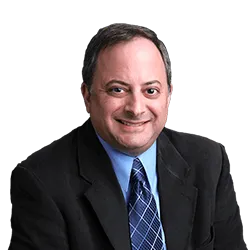
Steven F. Bliss, California Attorney (Bar No. 147856).
Local Office:
San Diego Probate Law3914 Murphy Canyon Rd San Diego, CA 92123 (858) 278-2800
San Diego Probate Law is a practice location and trade name used by Steven F. Bliss, Esq., a California-licensed attorney.
About the Author & Legal Review Process
This article was researched and drafted by the Legal Editorial Team of the Law Firm of Steven F. Bliss, Esq.,
a collective of attorneys, legal writers, and paralegals dedicated to translating complex legal concepts into clear, accurate guidance.
Legal Review:
This content was reviewed and approved by Steven F. Bliss, a California-licensed attorney (Bar No. 147856).
Mr. Bliss concentrates his practice in estate planning and estate administration, advising clients on proactive planning strategies and representing fiduciaries in probate and trust administration proceedings when formal court involvement becomes necessary.
With more than 35 years of experience in California estate planning and estate administration,
Mr. Bliss focuses on structuring enforceable estate plans, guiding fiduciaries through court-supervised proceedings,
resolving creditor and notice issues, and coordinating asset management to support compliant, timely distributions and reduce fiduciary risk.
|