
Under California Probate Code Section 15200, a trust may be created by a transfer of property, a declaration by the owner, or the exercise of a power of appointment. To be valid, the settlor must manifest a specific “intent to create a trust” (Section 15201) and the trust must have a lawful purpose that is not against public policy (Section 15203). The evidentiary standard for real property trusts is governed by the Statute of Frauds under Section 15206, necessitating a written instrument signed by the settlor or the trustee. For personal property, an oral trust may be established only through “clear and convincing evidence” under Section 15207. Enforcement logic dictates that a trust must have a reasonably ascertainable beneficiary (Section 15205) and identifiable trust property (res) at the time of inception. Furthermore, the settlor must possess the requisite legal capacity, which is generally measured by the same standards as testamentary capacity under Section 6100.5. Failure to satisfy these five core elements—intent, property, lawful purpose, identifiable beneficiaries, and proper formation—renders the instrument void or resulting in a “resulting trust” back to the settlor’s estate.
In California, a trust is only “real” to the extent it is properly created and tied to identifiable property and intent, not because a binder exists. The core formation pathways and requirements are set by statute, including how a trust may be created under Prob. Code § 15200 and what must exist for a valid trust relationship. When documentation and title alignment are disciplined from day one, later authority questions have far less room to grow.
How I evaluate trust formation risk before it becomes a control problem

I have practiced estate planning in San Diego for more than 35 years, and the same pattern repeats in La Jolla, Del Mar, and Mission Hills: people assume the trust exists because papers were signed, while institutions and counterparties focus on proof and title. Under California Law, I start by confirming intent and the trust relationship under Prob. Code § 15201, then I pressure-test the asset map: deeds, account registrations, operating agreements, and the “real” control trail. My CPA discipline matters here because valuation support and basis awareness are not theory in San Diego—one missing schedule entry can create capital gains exposure and a documentation fight at the same time.
Strategic Insight (San Diego): A common local wrinkle is privately held business interests tied to Sorrento Valley entities where the operating agreement requires a specific chain of authority before distributions or voting rights are recognized. If the trust’s creation and asset linkage are not provable, the dispute often shifts from “what was intended” to “what can be enforced,” which is why I document the creation pathway cleanly under Prob. Code § 15200 and then align title and governance before anyone else gets leverage.
Why San Diego realities and California Law change trust validity outcomes
In San Diego County, validity questions rarely arrive as philosophical debates—they arrive as a bank compliance request, a sale deadline for Rancho Santa Fe real property, or a suddenly impatient co-trustee who wants proof of authority. California Law is deliberate about what must exist for a trust to be enforceable, including the requirement that trust property be identifiable under Prob. Code § 15202. This is general information under California Law; specific facts change strategy.
- Failure to align title with the trust (especially deeds and brokerage registrations) creates authority gaps that third parties can exploit.
- Using informal “amendments” without the right method invites a later argument that changes were never effective.
- Unclear beneficiary descriptions and shifting distributions increase fiduciary exposure and dispute posture if a challenge arises.
- Local carrying costs—HOA obligations, insurance renewals, and property maintenance—create timing pressure that punishes sloppy documentation.
- Privacy expectations often conflict with what institutions require; the solution is controlled proof, not oversharing.
The focal point is documentation discipline: the trust must be created in a statutorily recognized manner, and the record must support what you will later need to prove. If a transfer is challenged, I want the formation pathway and amendment posture to be clean and predictable, including compliance with the method of modification for a revocable trust under Prob. Code § 15401. In practice, that means a file built to withstand scrutiny, not just to “feel complete.”
My CPA advantage is operational: I build a valuation-and-basis-aware asset schedule that matches the trust’s control trail, so future reporting and liquidity decisions are not forced into guesswork. The recognition to adopt valuation discipline early is what prevents last-minute disputes over what the trust owns, what it controls, and what a fiduciary can responsibly sign without later exposure.
The Immediate 5: the questions that determine whether your trust formation holds, or fractures under pressure
When I evaluate trust creation and validity, I start with five intake questions that tell me whether we have defensibility, or just paperwork. The goal is not complexity; it is clarity—proof of creation, proof of assets, and a control trail that survives deadlines, institutional scrutiny, and the inevitable timing pressure that shows up in San Diego.
What exact method created the trust, and can we prove it without assumptions?
I want the creation pathway stated precisely: a written declaration, a transfer to a trustee, or another statutorily recognized method under Prob. Code § 15200. If the file depends on oral recollections or scattered drafts, the risk is not “technical” risk—it is proof risk, because third parties and later disputants will ask for a clean record that shows when the trust came into existence and how.
What property was actually tied to the trust, and what is still floating outside it?
Validity and usefulness depend on identifiable trust property; if assets were never retitled, assigned, or scheduled, you may have a document but not control. I verify deeds, account registrations, and assignments so the trust property requirement is satisfied in practice, not just in intention.
Who are the beneficiaries in real-world terms, and does the document leave room for conflict?
“Beneficiary” clarity is not about warmth; it is about governance. I look for ambiguous descriptions, mismatched contingent terms, or distribution language that invites competing interpretations, because those issues are what turn a private plan into a public dispute if relationships shift.
Who has authority today, and what will a bank or title company demand to recognize it?
In San Diego, institutions commonly request a certification of trust, relevant excerpts, and a control chain they can audit without reading your entire plan. I plan for privacy by organizing what will be shown, and I plan for speed by ensuring the documentation matches how the assets are titled and how the trustee’s authority is expressed.
What changes have been made since signing, and were they executed in a legally effective way?
Amendments, restatements, and asset changes must follow a predictable method or they become the soft underbelly of the plan. I confirm that changes were documented and executed in a way that aligns with the trust’s governing requirements and the client’s intended control, so later parties cannot credibly claim the “current” version is uncertain.
Practical intake note: If you cannot answer these five questions cleanly, you do not need more pages—you need tighter proof, better title alignment, and a disciplined record that supports authority without broadcasting private family details.

A trust’s defensibility is built like a ledger: clean inputs, dated changes, and a record that matches what the world can verify. The moment a lender, buyer, or counterparties at a San Diego financial institution ask “who can sign,” the answer must be supported by an identifiable asset trail and coherent amendments. My focus is administrative control with privacy preserved—provide what is necessary, withhold what is not, and keep the governance file ready for real deadlines.
- Title alignment that matches the trust’s control language
- Asset schedule discipline that survives refinancing and sales
- Change management that does not invite competing “versions”
Procedural realities that keep trust validity from turning into a timing crisis
Evidence & Documentation Discipline
The evidence that matters is the evidence tied to time: signed trust instruments, acceptance, dated schedules, recorded deeds, and account registration history. California requires trust property to be identifiable under Prob. Code § 15202, and in practice that means your file has to show the “what” and the “when” in a way a third party can recognize.
- Transfer documents vs actual control/ownership
- Valuation support vs later audit/challenge risk
- Timeline consistency for planning vs creditor/liability exposure
- Tie to California compliance and defensibility
Where this becomes relevant is when an oral promise, a missing assignment, or an unsigned schedule is treated as “good enough” until it suddenly is not. If anyone later claims the trust terms or formation cannot be proven, the evidentiary posture becomes the battleground, and California limits what can be established without reliable proof under Prob. Code § 15207.
Negotiation vs Transaction-Challenge Reality
Once a transaction is challenged, the conversation shifts from “what should happen” to “what can be shown,” and the leverage belongs to the party with the cleaner record. If judicial review becomes necessary, the probate court’s jurisdiction to interpret and confirm trust administration issues can be invoked under Prob. Code § 17200, so I plan as though every major asset decision might need to be explained later.
- What changes once a transaction is challenged
- Documentation, timing, valuation, compliance posture
- Procedural reality only
Complex Scenarios
Digital assets and cryptocurrency access planning, no-contest clause boundaries, and community property control issues are not “extras”—they are common friction points when families and institutions collide. Where this becomes relevant is when someone uses a no-contest clause as a threat rather than understanding enforceability limits under Prob. Code § 21311, while the real risk is that control and access were never operationally secured.
For digital accounts, the practical question is whether your fiduciary can lawfully access and marshal what you own without improvising passwords or risking unauthorized access. California’s digital asset access framework under Prob. Code § 870 is part of the compliance posture, and it belongs in the same governance file as deeds and account registrations.
Lived experiences from clients who wanted control without drama
Bradley C.
“We had a trust binder, but we didn’t have control. Steve identified what wasn’t actually in the trust, cleaned up the documentation, and coordinated the steps so our banking and property decisions weren’t delayed. The practical outcome was clarity and privacy—what needed to be shown was ready, and what didn’t need to be shared stayed protected.”
Dana P.
“Our concern was conflict later, not just paperwork today. Steve rebuilt the trust record with governance in mind, made the amendments defensible, and stabilized the asset schedule so there weren’t ‘two versions’ floating around. The result was relief: fewer points of friction for family members and a plan that felt controlled instead of fragile.”
California statutory framework and legal authority referenced on this page
If you want your trust to function with privacy and administrative control in San Diego, the most productive first step is to verify creation method, asset linkage, and amendment posture so your plan is defendable before a deadline forces the issue.
|
Attorney Advertising, Legal Disclosure & Authorship
ATTORNEY ADVERTISING.
This content is provided for general informational and educational purposes only and does not constitute legal, financial, or tax advice.
Under the California Rules of Professional Conduct and State Bar advertising regulations, this material may be considered attorney advertising.
Reading this content does not create an attorney-client relationship or any professional advisory relationship.
Laws vary by jurisdiction and are subject to change, including recent 2026 developments under California’s AB 2016 and evolving federal estate and reporting requirements.
You should consult a qualified attorney or advisor regarding your specific circumstances before taking action.
Responsible Attorney:
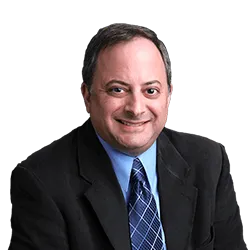
Steven F. Bliss, California Attorney (Bar No. 147856).
Local Office:
San Diego Probate Law3914 Murphy Canyon Rd San Diego, CA 92123 (858) 278-2800
San Diego Probate Law is a practice location and trade name used by Steven F. Bliss, Esq., a California-licensed attorney.
About the Author & Legal Review Process
This article was researched and drafted by the Legal Editorial Team of the Law Firm of Steven F. Bliss, Esq.,
a collective of attorneys, legal writers, and paralegals dedicated to translating complex legal concepts into clear, accurate guidance.
Legal Review:
This content was reviewed and approved by Steven F. Bliss, a California-licensed attorney (Bar No. 147856).
Mr. Bliss concentrates his practice in estate planning and estate administration, advising clients on proactive planning strategies and representing fiduciaries in probate and trust administration proceedings when formal court involvement becomes necessary.
With more than 35 years of experience in California estate planning and estate administration,
Mr. Bliss focuses on structuring enforceable estate plans, guiding fiduciaries through court-supervised proceedings,
resolving creditor and notice issues, and coordinating asset management to support compliant, timely distributions and reduce fiduciary risk.
|