
California estate planning validity turns on strict statutory compliance. Wills must satisfy execution standards under Prob. Code § 6110, while testamentary capacity is defined by Prob. Code § 6100.5. Trust administration and modification follow the Trust Law framework beginning at Prob. Code § 15000 et seq. Undue influence is evaluated under Civ. Code § 1575 and related Probate Code presumptions. Evidentiary sufficiency in disputes frequently relies on business record admissibility standards under Evid. Code § 1271.
Estate Planning Blog Hub
This is the central hub for estate planning basics in California. If you want the short version: estate planning is the legal system that decides who controls your assets, who makes decisions if you cannot, and how fast your family can move after a death. The sub-hubs below go deep into each category (wills, trusts, probate, incapacity, tax, and asset protection). This page stays wide: it gives you the roadmap, the definitions that matter, and the “how things actually break” triggers that push families into court.

What Estate Planning Actually Controls
A working plan does three things: it names decision-makers, sets legal permissions, and creates a transfer pathway. Without those pieces, families end up improvising with the court as the referee. The goal is not paperwork. The goal is control: your intent stays intact even when life gets messy (hospitalization, conflict, remarriage, a caregiver situation, or a sudden death).
- Authority: who can act during incapacity, and what they can do.
- Ownership: how assets are titled, and whether they transfer privately or through probate.
- Enforcement: what happens when someone disagrees, and what evidence the court will require.

The “Break Points” That Trigger Probate or Litigation
Most families do not “choose” probate or disputes — they stumble into them through predictable break points. This library is designed to prevent those triggers by making the mechanics visible before you are under pressure. If you see your situation in the list below, start with the matching sub-hub and work outward.
- Real estate is not titled correctly: the trust exists, but the house is still in an individual name.
- No incapacity authority: banks and providers refuse access without a valid POA or directive.
- Blended family pressure: second marriage + children from a prior relationship = predictable conflict risk.
- Capacity questions: timing, diagnosis, medication changes, and “who was present” become evidence.
- Caregiver involvement: the law scrutinizes transfers when power dynamics are unequal.
Start Here: Sub-Hubs That Go Deep
Use these sub-hubs as your control centers. Each one is paired with a blog feed (added below in Kadence) so new pages can be indexed continuously while maintaining a clean topic structure.
- Wills — execution validity, gifts, guardianship, capacity, contests.
- Trusts — living trusts, funding, Heggstad issues, administration logic.
- Probate — court timelines, creditor claims, accountings, disputes.
- Incapacity Planning — POAs, medical directives, HIPAA, emergency authority.
- Estate Tax & Property — step-up basis, transfer consequences, Prop 19 exposure.
- Asset Protection — risk containment, ownership structure, compliance boundaries.
Estate Planning Basics (Plain-English Definitions)
If you only learn one thing from this hub, learn this: documents do not control outcomes by themselves. Outcomes are controlled by a combination of legal validity, asset title, and enforceable authority. The sub-hubs break each one down, but these baseline definitions keep you from getting misled by marketing terms.
- Will: directs transfers at death, but often still routes property through probate unless paired with other tools.
- Trust: a legal container for ownership and instructions; it only works if assets are actually titled into it.
- Probate: court-supervised process for administering assets that do not transfer by beneficiary or trust.
- Power of Attorney: financial authority during life; banks usually require strict compliance and clean drafting.
- Health Directive: medical decision authority and treatment preferences, often paired with HIPAA permissions.
What “Done Correctly” Looks Like
A reliable plan is measurable. You can audit it. You can test it. You can verify that it will work under stress. The categories below are where most DIY plans fail, and they are also where professional review produces the biggest risk reduction.
- Funding: deeds, account ownership, and beneficiary designations match the plan.
- Backups: successor fiduciaries are named, and roles are not concentrated in one fragile person.
- Evidence readiness: capacity and influence risk is addressed proactively when red flags exist.
- Administration clarity: trustees and executors have instructions that can actually be followed.
California Statutory Framework & Legal Authority
What A Comprehensive Estate Plan Includes?
Unai was devastated when his mother passed away without a properly funded Trust. He assumed her Will covered everything, but the probate process dragged on for eighteen months, costing his family $123,891 in legal fees and court costs. Worse, the…What Estate Planning Means Under California Law?
Last month, I met with a distraught young man named Alistair whose mother passed away unexpectedly without a Trust. She’d told him she had “everything covered,” but the reality was a tangled mess of joint ownerships and beneficiary designations. Because…What Is The Difference Between An Advance Healthcare Directive And A Polstdnr?
Last month, I met with a distraught daughter, Asier, whose mother, Beatrice, suffered a sudden stroke. Beatrice had a Will, but no Advance Healthcare Directive. Because Beatrice hadn’t documented her wishes regarding life-sustaining treatment, Asier was forced into a painful…






|
Attorney Advertising, Legal Disclosure & Authorship
ATTORNEY ADVERTISING.
This content is provided for general informational and educational purposes only and does not constitute legal, financial, or tax advice.
Under the California Rules of Professional Conduct and State Bar advertising regulations, this material may be considered attorney advertising.
Reading this content does not create an attorney-client relationship or any professional advisory relationship.
Laws vary by jurisdiction and are subject to change, including recent 2026 developments under California’s AB 2016 and evolving federal estate and reporting requirements.
You should consult a qualified attorney or advisor regarding your specific circumstances before taking action.
Responsible Attorney:
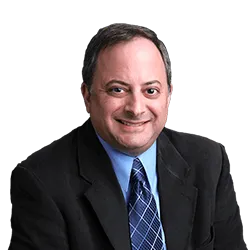
Steven F. Bliss, California Attorney (Bar No. 147856).
Local Office:
San Diego Probate Law3914 Murphy Canyon Rd San Diego, CA 92123 (858) 278-2800
San Diego Probate Law is a practice location and trade name used by Steven F. Bliss, Esq., a California-licensed attorney.
About the Author & Legal Review Process
This article was researched and drafted by the Legal Editorial Team of the Law Firm of Steven F. Bliss, Esq.,
a collective of attorneys, legal writers, and paralegals dedicated to translating complex legal concepts into clear, accurate guidance.
Legal Review:
This content was reviewed and approved by Steven F. Bliss, a California-licensed attorney (Bar No. 147856).
Mr. Bliss concentrates his practice in estate planning and estate administration, advising clients on proactive planning strategies and representing fiduciaries in probate and trust administration proceedings when formal court involvement becomes necessary.
With more than 35 years of experience in California estate planning and estate administration,
Mr. Bliss focuses on structuring enforceable estate plans, guiding fiduciaries through court-supervised proceedings,
resolving creditor and notice issues, and coordinating asset management to support compliant, timely distributions and reduce fiduciary risk.
|