Does Notarization Make A Will Self Proving In California?
A properly executed will is the cornerstone of any estate plan, but simply having a will notarized doesn’t automatically make it “self-proving” in California. While notarization is a crucial step in the execution process, it’s the simultaneous presence of two witnesses, along with the specific language required by experienced wills attorney drafting counsel, that creates a self-proving affidavit. This affidavit streamlines the probate process by providing a sworn statement from the witnesses, eliminating the need for them to testify in court about the validity of the will. A comprehensive structured estate planning framework is essential to ensure your wishes are carried out efficiently and without unnecessary complications.
The California Probate Code outlines specific requirements for a valid will, and a self-proving affidavit is a powerful tool to avoid potential challenges. Without it, the court must locate the witnesses and verify their signatures, which can be difficult if they are unavailable or unwilling to cooperate. This can lead to delays, increased costs, and even a contested will.
What are the requirements for a valid California will?
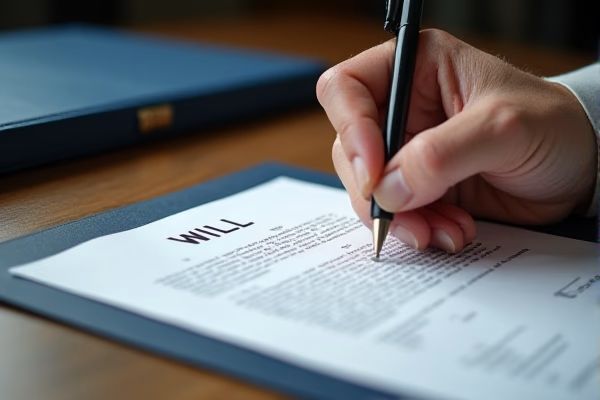
A valid California will requires several key elements. First, the testator (the person making the will) must be of sound mind and at least 18 years old. The will must be in writing, signed by the testator, and witnessed by two individuals who are present when the testator signs. These witnesses must also sign the will, attesting to the testator’s signature. The Probate Code § 6110 details these requirements, and even minor deviations can invalidate the entire document.
Notarization serves as an additional layer of verification, confirming the identity of the testator. However, it doesn’t substitute for the witness requirement. The witnesses must have a clear view of the signing and understand they are attesting to the testator’s signature on a document intended to be their last will and testament.
What is a self-proving affidavit and why is it important?
A self-proving affidavit is a sworn statement signed by the testator and the two witnesses in front of a notary public. It attests to the fact that the will was properly executed according to California law. This affidavit eliminates the need for the witnesses to appear in court to testify about the signing of the will, simplifying the probate process.
The importance of a self-proving affidavit cannot be overstated. It can save significant time and money, especially if the witnesses are located far away or are elderly or ill. It also reduces the risk of a contested will, as it provides a clear and documented record of the execution process.
What happens if a will is not self-proving?
If a will is not self-proving, the court will require the witnesses to testify about the signing of the will. This can be a time-consuming and expensive process, especially if the witnesses are difficult to locate or unwilling to cooperate. If a witness is unavailable, the court may accept a substitute affidavit, but this is not guaranteed.
In some cases, a will that is not self-proving may be challenged by disgruntled heirs. Without the affidavit, it can be more difficult to defend the will’s validity, potentially leading to costly litigation and a different outcome than the testator intended.
Can a holographic will be self-proving?
A holographic will, which is entirely handwritten by the testator, does not require witnesses and therefore cannot be self-proving in the traditional sense. However, the Probate Code § 6111 requires that the entire will be in the testator’s handwriting, and any alterations or additions must also be handwritten.
While a holographic will doesn’t require notarization or witnesses, it’s still important to ensure it’s clearly written and signed by the testator.
What role does a CPA-attorney play in will drafting?
As an estate planning attorney and CPA with over 35 years of experience in San Diego, California, I often emphasize the importance of integrating tax considerations into the will drafting process. A CPA-attorney can help you minimize estate taxes, maximize the step-up in basis for inherited assets, and avoid costly capital gains taxes.
For example, understanding the nuances of asset titling and beneficiary designations can significantly impact the tax consequences for your heirs. A properly structured will can ensure that your assets are distributed in a tax-efficient manner, preserving more of your wealth for future generations.
What are the potential pitfalls of DIY will kits?
While DIY will kits may seem like a cost-effective option, they often lack the specific language and legal expertise needed to ensure a valid and enforceable will. These kits may not comply with California law, leading to challenges in probate.
Furthermore, DIY kits often fail to address complex estate planning issues, such as blended families, business ownership, or digital assets. It’s crucial to work with an attorney-led will drafting counsel to ensure your will is tailored to your specific needs and circumstances.
How does marriage affect an existing will?
Marriage after a will is signed can have significant implications for the will’s validity. Under Probate Code § 6122 and § 21610, the new spouse may be entitled to a statutory share of the estate, even if they are not named in the will.
It’s essential to review and update your will after marriage to reflect your new family situation and ensure your wishes are carried out.
What if I forget to include an asset in my will?
If an asset is unintentionally omitted from your will, it will be distributed according to California’s intestate succession laws. However, if the omission was due to a mistake, a Heggstad Petition (Probate Code § 850) may be filed to transfer the asset into the trust or will.
This petition requires evidence that the omission was unintentional and that the asset would have been included in the will if the testator had remembered it.
What is the importance of regularly reviewing and updating my will?
Life circumstances change, and your will should be reviewed and updated accordingly. Changes in family status, asset ownership, or tax laws can all impact the validity and effectiveness of your will.
I recommend reviewing your will every three to five years, or whenever there is a significant life event, such as a marriage, divorce, birth of a child, or change in financial circumstances.
What are the implications of digital assets in estate planning?
Digital assets, such as online accounts, social media profiles, and cryptocurrency, are becoming increasingly important in estate planning. Without specific disclosure language in your Trust, custodians like Google or Coinbase are legally permitted to block your Successor Trustee’s access to your digital legacy.
It’s essential to include provisions in your will or trust that address the management and distribution of your digital assets.
How does the SECURE Act 2.0 affect inherited retirement accounts?
The SECURE Act 2.0 has made significant changes to the rules governing inherited retirement accounts. Most non-spouse beneficiaries must deplete inherited accounts within 10 years. If the owner died after their Required Beginning Date (RBD), annual distributions are mandatory in years 1–9.
Understanding these rules is crucial to minimize tax liabilities and ensure a smooth transfer of retirement assets to your heirs.
|
Attorney Advertising, Legal Disclosure & Authorship
ATTORNEY ADVERTISING.
This content is provided for general informational and educational purposes only and does not constitute legal, financial, or tax advice.
Under the California Rules of Professional Conduct and State Bar advertising regulations, this material may be considered attorney advertising.
Reading this content does not create an attorney-client relationship or any professional advisory relationship.
Laws vary by jurisdiction and are subject to change, including recent 2026 developments under California’s AB 2016 and evolving federal estate and reporting requirements.
You should consult a qualified attorney or advisor regarding your specific circumstances before taking action.
Responsible Attorney:
Steven F. Bliss, California Attorney (Bar No. 147856).
Local Office:
San Diego Probate Law3914 Murphy Canyon Rd San Diego, CA 92123 (858) 278-2800
San Diego Probate Law is a practice location and trade name used by Steven F. Bliss, Esq., a California-licensed attorney.
About the Author & Legal Review Process
This article was researched and drafted by the Legal Editorial Team of the Law Firm of Steven F. Bliss, Esq.,
a collective of attorneys, legal writers, and paralegals dedicated to translating complex legal concepts into clear, accurate guidance.
Legal Review:
This content was reviewed and approved by Steven F. Bliss, a California-licensed attorney (Bar No. 147856).
Mr. Bliss concentrates his practice in estate planning and estate administration, advising clients on proactive planning strategies and representing fiduciaries in probate and trust administration proceedings when formal court involvement becomes necessary.
With more than 35 years of experience in California estate planning and estate administration,
Mr. Bliss focuses on structuring enforceable estate plans, guiding fiduciaries through court-supervised proceedings,
resolving creditor and notice issues, and coordinating asset management to support compliant, timely distributions and reduce fiduciary risk.
|