
Under California Probate Code Section 10800, executor compensation is determined by a mandatory statutory sliding scale based on the inventory value of the estate: 4% of the first $100,000, 3% of the next $100,000, 2% of the next $800,000, and 1% of the next $9,000,000. The “how” of payment is strictly regulated; fees may only be disbursed following a court order, typically at the final distribution. Evidentiary standards for “extraordinary fees” under Section 10801 require the executor to provide detailed time logs and proof that services—such as managing a business or litigating tax disputes—exceeded typical administrative duties. Enforcement logic dictates that if an executor breaches their fiduciary duty, the court may reduce or deny compensation under Section 12205 for delays in closing the estate. Furthermore, any fee-sharing agreements or dual-compensation for executors also serving as the estate’s attorney must meet the rigorous disclosure and court approval requirements of Section 10804 to prevent prohibited self-dealing.
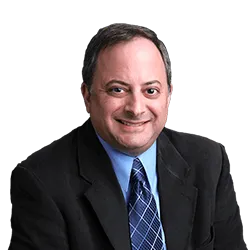
Under California Law, executor compensation is not negotiated in the abstract; it is governed by statute and documented through the administration record. Ordinary compensation follows the percentage schedule in Prob. Code § 10800, while additional compensation requires a showing of extraordinary services under Prob. Code § 10801. Fee disputes are usually decided by evidence discipline: what was done, why it mattered, and whether the estate benefited.
How Fee Disputes Actually Surface in San Diego Administration

I have handled estate planning and fiduciary matters in San Diego for more than 35 years, and compensation disputes rarely start with greed; they start with ambiguity. A Mission Hills estate may have a house, a concentrated stock position, and multiple heirs who want privacy, yet nobody agrees on what work was “routine” versus truly exceptional. California Law rewards transparent process, and when clarity breaks down the first stabilizing move is often to compel a structured accounting so the numbers can be reconciled under Prob. Code § 10950. My CPA basis is practical: I look for valuation discipline, receipt integrity, and category consistency so the record explains itself without emotional narration.
Strategic Insight (San Diego): In La Jolla and Rancho Santa Fe administrations, fee disputes often come from “helpful” side decisions: paying contractors, advancing expenses, or coordinating listings without a written approval path. The local nuance is that carrying costs move quickly and families assume speed equals necessity, but necessity still needs documentation. The preventative strategy is a simple governance protocol: one ledger, one approvals channel, and a monthly summary that keeps the audience small. The practical result is that compensation becomes a math-and-proof discussion instead of a relationship rupture.
Why San Diego + California Law Changes the Compensation Conversation
In San Diego County, real property and private financial accounts amplify the stakes because delays convert directly into carrying costs, and beneficiaries notice. California Law sets a default compensation schedule for ordinary services, and Prob. Code § 10800 becomes the baseline reference point when someone asks, “What is this fee actually for?”
- Unclear scope: routine administration blurred with personal favors and errands.
- Asset complexity without valuation support or a clean receipt trail.
- Property decisions made quickly without documenting why timing mattered.
- Reimbursements mixed with compensation, creating confusion about what is being requested.
- Updates that are selective, which increases suspicion and invites objections.
Extraordinary compensation is where disputes usually ignite, because “extra work” is not self-proving; it must be shown and tied to benefit, necessity, and reasonableness. That is why Prob. Code § 10801 matters: it forces a disciplined distinction between ordinary process and true exceptional services.
This is general information under California Law; specific facts change strategy. My CPA advantage is operational discipline: valuation support, basis awareness, and transaction categorization that keeps compensation requests aligned to proof, not personality, especially when San Diego real property and brokerage assets are involved.
The Immediate 5: The questions that determine whether executor fees are approved quietly or disputed publicly
Fee disputes are rarely about the number alone; they are about whether the record supports the number. These are the first questions I ask to evaluate proof, timing, and exposure, so the file stays controlled and the administration remains dignified. The emphasis is documentation discipline and a defensible basis for every request.
Field note: If you cannot summarize the compensation request in one sentence with a document trail attached, you are not ready to “negotiate” it.
Is the executor requesting ordinary statutory compensation, extraordinary compensation, or both?
Ordinary compensation is typically calculated by the statutory schedule and is not a time-sheet exercise under Prob. Code § 10800. Extraordinary compensation requires a separate showing of what was done, why it was outside routine administration, and how the estate benefited under Prob. Code § 10801.
What is the accounting backbone: what documents prove the work, the timing, and the benefit?
The dispute is won or lost on evidence discipline: statements, invoices, receipts, sale documents, escrow timelines, and a ledger that ties each line item to a real transaction. In San Diego administrations with real property, the benefit analysis should address carrying costs, risk mitigation, and whether a decision preserved value. If the record requires verbal explanation to make sense, the request is vulnerable.
Were reimbursements, advances, and compensation separated cleanly from the start?
Confusion often comes from mixing categories: reimbursable expenses, executor compensation, and payments to third parties. A clean file shows who paid what, when, and whether reimbursement was authorized, with receipts tied to each entry. Separation protects the executor and reduces beneficiary suspicion because it prevents double-counting.
Is the timing disciplined, or did delay inflate the fee narrative?
When a Del Mar or Mission Hills property sits, costs rise and frustration follows, which can make any fee request feel opportunistic even if the work was real. The timing question is simple: what decisions were made promptly, what decisions were deferred, and what did deferral cost the estate. A credible request explains why timing was necessary, not merely convenient.
If a dispute arises, what is the controlled path to resolution without expanding the audience?
Start by narrowing the dispute to defined categories and documents, then confirm whether the request can be clarified with a supplemental ledger and supporting exhibits. If transparency is refused, a beneficiary may need a court-ordered accounting to force structure and deadlines under Prob. Code § 10950. The goal is not drama; it is administrative control and a record that a neutral reviewer can follow.

In San Diego County, fee disputes can become expensive simply because they slow everything else: listings pause, repairs wait, and financial institutions demand clearer authority before moving funds. When privacy matters, the best posture is a tight record, a short approvals chain, and a compensation request that reads like a ledger reconciliation. The faster the documentation catches up, the less likely the dispute becomes the center of the administration.
Procedural Realities in Executor Compensation & Fee Disputes
Practical focus: A compensation request should be built like an audit file: ledger first, exhibits second, explanation last.
Evidence & Documentation Discipline
A controlled dispute starts by locking the evidence: a complete ledger, supporting statements, receipts, and a clear separation between expenses and compensation. When the record is incomplete, the first move is often to force structure through a petition for an ordered account under Prob. Code § 10950, because it converts “concerns” into entries that must be reconciled.
- Transfer documents vs actual control/ownership
- Valuation support vs later audit/challenge risk
- Timeline consistency for planning vs creditor/liability exposure
- Tie to California compliance and defensibility
If an executor resists accounting discipline, the risk posture shifts because refusal becomes part of the dispute narrative. Courts can compel a required account, and Prob. Code § 11050 supports enforcement that replaces stalling with deadlines and consequences.
Negotiation vs Transaction-Challenge Reality
Once fees are challenged, the conversation stops being interpersonal and becomes categorical: statutory ordinary compensation, extraordinary compensation, reimbursable expenses, and third-party payments. The baseline schedule in Prob. Code § 10800 matters because it anchors what is “ordinary” and narrows the dispute to whether anything truly qualifies beyond that baseline.
- What changes once a transaction is challenged
- Documentation, timing, valuation, compliance posture
- Procedural reality only
Complex Scenarios
Digital assets and cryptocurrency access planning can become fee fuel when access steps are improvised, devices are moved, and values cannot be reconstructed; where this becomes relevant is that “time spent” is not the same as “work justified,” and a fiduciary’s authority must be exercised with documented discipline. California’s digital assets framework can shape what access actions are appropriate under Prob. Code § 871. No-contest clause boundaries can also influence beneficiary posture and communication strategy, and community property and spousal control issues add another layer because you must identify what is actually subject to executor administration before counting “work” that was never within the executor’s proper lane.
No-contest provisions can change how beneficiaries object, what they will sign, and how disputes are framed, especially when privacy is a priority. That is why the enforceability boundaries in Prob. Code § 21311 matter when calibrating how objections and resolutions are documented.
Lived Experiences
Tonya H.
“We were losing time and the fee request was becoming the whole story. Steve imposed a clear documentation standard, separated reimbursements from compensation, and helped us stabilize the file without turning it into a family spectacle. The practical outcome was clarity, preserved privacy, and a resolution path everyone could understand.”
Nathan A.
“The issue was not just money; it was that nothing was explained in a way a neutral person could follow. Steve rebuilt the ledger, focused everyone on proof instead of accusations, and kept the administration moving while the dispute narrowed. The result was reduced conflict and governance that felt controlled again.”
California Statutory Framework & Legal Authority
Recognition: These are the controlling statutes I use to keep compensation discussions anchored to evidence and enforceable standards under California Law.
Closing Control: How I Keep Fee Disputes Quiet and Evidence-Driven
If you are facing an executor compensation or fee dispute, the safest next step is to narrow the issue to categories, documents, and a clean timeline before communications widen. A controlled review focuses on the ledger, the receipts, the valuation basis, and whether any extraordinary request is truly supported. If you want a discreet, CPA-informed assessment of the compensation posture and the record quality in San Diego County, I can help you structure the file so decisions are defensible and the administration stays focused.
- One consolidated ledger with receipts and statements tied to each entry.
- A clear separation between reimbursement, compensation, and third-party payments.
- A valuation basis that supports both fees and long-term tax posture.
- A communication protocol that preserves privacy while maintaining accountability.
|
Attorney Advertising, Legal Disclosure & Authorship
ATTORNEY ADVERTISING.
This content is provided for general informational and educational purposes only and does not constitute legal, financial, or tax advice.
Under the California Rules of Professional Conduct and State Bar advertising regulations, this material may be considered attorney advertising.
Reading this content does not create an attorney-client relationship or any professional advisory relationship.
Laws vary by jurisdiction and are subject to change, including recent 2026 developments under California’s AB 2016 and evolving federal estate and reporting requirements.
You should consult a qualified attorney or advisor regarding your specific circumstances before taking action.
Responsible Attorney:
Steven F. Bliss, California Attorney (Bar No. 147856).
Local Office:
San Diego Probate Law3914 Murphy Canyon Rd San Diego, CA 92123 (858) 278-2800
San Diego Probate Law is a practice location and trade name used by Steven F. Bliss, Esq., a California-licensed attorney.
About the Author & Legal Review Process
This article was researched and drafted by the Legal Editorial Team of the Law Firm of Steven F. Bliss, Esq.,
a collective of attorneys, legal writers, and paralegals dedicated to translating complex legal concepts into clear, accurate guidance.
Legal Review:
This content was reviewed and approved by Steven F. Bliss, a California-licensed attorney (Bar No. 147856).
Mr. Bliss concentrates his practice in estate planning and estate administration, advising clients on proactive planning strategies and representing fiduciaries in probate and trust administration proceedings when formal court involvement becomes necessary.
With more than 35 years of experience in California estate planning and estate administration,
Mr. Bliss focuses on structuring enforceable estate plans, guiding fiduciaries through court-supervised proceedings,
resolving creditor and notice issues, and coordinating asset management to support compliant, timely distributions and reduce fiduciary risk.
|