
Under California Probate Code Section 6111, a Holographic Will is valid if the signature and material provisions are in the handwriting of the testator, whereas a Formal Will under Section 6110 requires strict adherence to witness and execution formalities. For high-net-worth individuals in San Diego, the choice between these instruments often determines whether an estate plan is vulnerable to litigation or administrative delays. By integrating 35+ years of legal mastery with CPA-led oversight, we ensure that your testamentary intent is anchored in the most robust legal framework available. This disciplined approach eliminates the “Logic Fails” common in handwritten documents—such as ambiguous distribution terms or missing dates—ensuring your legacy is protected by a defensible, witnessed instrument that meets the highest evidentiary standards of the California Probate Court.
Holographic vs. Formal Wills in California: what protects San Diego families from avoidable disputes?
Under California Law, the single most important rule is this: if you want predictable enforcement, execute a formal will correctly and keep the paper trail clean under Probate Code section 6110. Holographic wills can work, but only when their requirements are met and the writing does not invite competing interpretations.
- Control: formal execution reduces interpretive noise and keeps intent easier to prove.
- Privacy posture: cleaner documents usually mean fewer disputes and fewer public filings if a dispute arises.
- Continuity: one consistent plan prevents “two documents, two stories” problems.
How I see this play out in San Diego planning
I have practiced in San Diego for more than 35 years as an estate planning attorney and CPA, and I have watched small drafting and execution shortcuts turn into outsized conflict when circumstances tighten. A common pattern is a high-value household that has a well-prepared formal will, then later adds a “quick handwritten update” after a refinance, a move between Del Mar and Rancho Santa Fe, or a new caregiver dynamic.
When competing papers exist, the question stops being “what did you mean” and becomes “what can be proved,” and capacity is often pulled into the center under Probate Code section 6100.5. As a CPA, I focus on valuation discipline and documentation discipline because unclear intent can collide with basis planning, liquidity needs, and timing—especially when San Diego real property carrying costs do not pause during conflict.
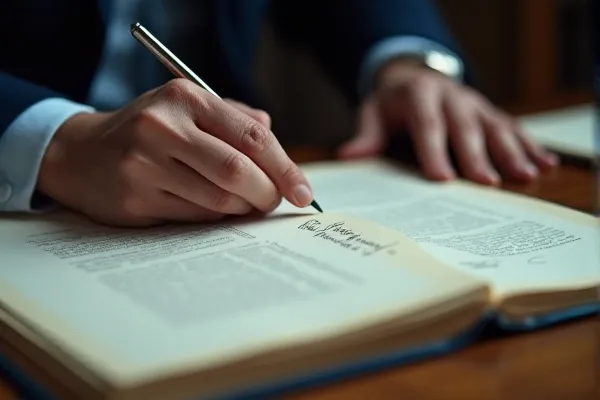
In practical terms, holographic vs. formal is less about “which is allowed” and more about “which stays defensible when someone challenges it.” Under Probate Code section 6111, a holographic will depends on handwriting and signature, and that invites proof questions when family dynamics are tense.
- Formal will: execution formalities create built-in proof structure and reduce ambiguity.
- Holographic will: may be valid, but tends to increase contest risk if wording is imprecise.
- HNW reality: the more complex the asset map, the less tolerance you have for interpretive gray zones.
Strategic Insight (San Diego): I have seen families in San Diego County treat a handwritten “add-on” as harmless, then discover it functioned like a partial revocation and created a ranking fight between documents. Local nuance: when a La Jolla or Del Mar property is involved, carrying costs (taxes, insurance, HOA, maintenance access) quickly turn a paper dispute into a liquidity problem. Preventative strategy: consolidate updates into one clean instrument and document the intent to supersede prior language under Probate Code section 6120, so your plan reads as one coherent set of instructions. Practical outcome: fewer openings for “inconsistency” arguments and more administrative control.
Why San Diego realities plus California Law change the outcome
San Diego planning is frequently real-estate heavy, and that concentration magnifies the risk of a sloppy will: access delays, property maintenance, and lender demands do not wait while relatives argue about what a handwritten note meant. If probate is required for your estate and a dispute arises, the proof burden becomes a central cost driver, which is why execution and proof posture matter under Probate Code section 8220.
California Law allows holographic wills, but the permission is not the same as predictability; the more your plan relies on precision (guardianship, staggered distributions, conditional gifts), the more you should assume the document will be read adversarially if relationships sour under Probate Code section 6111. This is general information under California Law; specific facts change strategy.
- San Diego County: real property timelines and access issues can force premature sales when documents are contested.
- Discretion: clearer instruments reduce the need for public filings and preserve privacy when family lines are sensitive.
- Local finance: institutions and counterparties typically want one authoritative set of instructions, not two competing papers.
Fiduciary exposure: how execution mistakes become governance risk
In planning mode, fiduciary exposure is not theoretical; it shows up when an executor or proposed fiduciary cannot act confidently because the will’s validity or meaning is in doubt. A formal will executed with discipline under Probate Code section 6110 is a governance tool, not just a signature event.
- Competing “versions” (formal will plus handwritten note) that create an internal inconsistency problem.
- Unclear “material provisions” in handwriting that invite interpretation fights under Probate Code section 6111.
- Capacity allegations that trigger expensive proof pathways and delay decision-making.
- Ambiguous nominations of fiduciaries that produce parallel authority claims.
- Missing date or context, leading to uncertainty about sequencing and revocation under Probate Code section 6120.
- Asset descriptions that do not match current title, creating administration friction and avoidable petitions.
When proof becomes the dispute, the fiduciary is forced into defensive administration, and the cost often lands where the family least wants it: delay, public filings, and eroded discretionary control under Probate Code section 8220.
Tax & accounting posture: the CPA advantage in a wills question
Most will problems are not “tax problems” at first; they become tax and accounting problems when ambiguity forces the wrong transaction at the wrong time. My CPA lens is simple: defensibility requires organized valuation support, basis awareness, and a documented timeline that makes sense if someone later challenges why a change occurred. In San Diego, that discipline often preserves options—whether the family needs to hold, refinance, distribute, or sell—without being cornered by uncertainty.
Practical takeaway: a will that reads cleanly is easier to administer; a will that proves cleanly is harder to attack.
The “Immediate 5” intake questions I use to stabilize will validity and intent
Do I actually qualify for a holographic will under California law, and what parts must be handwritten?
A holographic will can be valid when the material provisions are in your handwriting and you sign with intent to authenticate, but the document must still communicate clear testamentary intent under Probate Code section 6111. In San Diego practice, the risk is not “is it allowed,” it is “can it be proved without a family war,” so I treat clarity, dating, and a single authoritative location for the document as control tools tied to privacy and continuity. If your goal is to avoid a Kevin-style conflict, the safest move is usually converting the intent into one defensible formal instrument before stress and timing distort the record.
FAQ Answer (Plain Text): A holographic will can be valid when the material provisions are in your handwriting and you sign with intent to authenticate, but the document must still communicate clear testamentary intent under Probate Code section 6111. In San Diego practice, the risk is not “is it allowed,” it is “can it be proved without a family war,” so I treat clarity, dating, and a single authoritative location for the document as control tools tied to privacy and continuity. If your goal is to avoid a Kevin-style conflict, the safest move is usually converting the intent into one defensible formal instrument before stress and timing distort the record.
If I have a typed will, what execution steps keep it defensible in San Diego?
A typed will is only as defensible as its execution: signature, proper witnessing, and a clean process that can be explained later under Probate Code section 6110. I prefer a disciplined signing protocol (one sitting, clear identification of the instrument, no last-minute edits, stable witnesses) because San Diego disputes often focus on “who was in the room” and “what changed at the end.” The control objective is straightforward: create a record that discourages challenges and preserves privacy if someone tries to force the matter into a public contest.
FAQ Answer (Plain Text): A typed will is only as defensible as its execution: signature, proper witnessing, and a clean process that can be explained later under Probate Code section 6110. I prefer a disciplined signing protocol (one sitting, clear identification of the instrument, no last-minute edits, stable witnesses) because San Diego disputes often focus on “who was in the room” and “what changed at the end.” The control objective is straightforward: create a record that discourages challenges and preserves privacy if someone tries to force the matter into a public contest.
How do I reduce capacity and undue-influence attack risk when my circumstances are changing?
Capacity disputes are usually timing disputes in disguise, so I plan for a defensible timeline and documentation discipline that aligns with the capacity standard under Probate Code section 6100.5. In a San Diego context, I watch for inflection points: new caregivers, rapid health changes, sudden isolation, or sudden changes tied to real property decisions. The prevention goal is not drama; it is administrative control: we build a clean record that explains the “why now” so your plan survives scrutiny without forcing your family into a public proof exercise.
FAQ Answer (Plain Text): Capacity disputes are usually timing disputes in disguise, so I plan for a defensible timeline and documentation discipline that aligns with the capacity standard under Probate Code section 6100.5. In a San Diego context, I watch for inflection points: new caregivers, rapid health changes, sudden isolation, or sudden changes tied to real property decisions. The prevention goal is not drama; it is administrative control: we build a clean record that explains the “why now” so your plan survives scrutiny without forcing your family into a public proof exercise.
If I write multiple notes or later update my wishes, what governs revocation or inconsistency?
Multiple documents create sequencing risk: a later writing can revoke earlier provisions expressly or by inconsistency, and that fight often becomes the entire case under Probate Code section 6120. My approach is to avoid “paper drift” by consolidating changes into one controlled instrument and documenting intent to supersede prior drafts, especially when San Diego County assets and family expectations are complex. The practical aim is simple: one plan, one narrative, fewer openings for a challenger to claim the last document was confused, pressured, or incomplete.
FAQ Answer (Plain Text): Multiple documents create sequencing risk: a later writing can revoke earlier provisions expressly or by inconsistency, and that fight often becomes the entire case under Probate Code section 6120. My approach is to avoid “paper drift” by consolidating changes into one controlled instrument and documenting intent to supersede prior drafts, especially when San Diego County assets and family expectations are complex. The practical aim is simple: one plan, one narrative, fewer openings for a challenger to claim the last document was confused, pressured, or incomplete.
Where do my digital assets and community property create traps when my will is informal?
Where this becomes relevant is when an informal will tries to control assets that are governed by separate access rules and ownership rules: fiduciary access to digital assets is shaped by the Revised Uniform Fiduciary Access to Digital Assets Act under Probate Code section 870, and community property characterization can change what your will can practically direct under Family Code section 760. In San Diego households, the highest-friction scenarios involve crypto custody, business accounts, and spouse expectations that were never documented clearly. If you want control and privacy, we align ownership, access instructions, and the will’s language so your successors are not forced into contested requests and public filings just to do basic administration.
FAQ Answer (Plain Text): Where this becomes relevant is when an informal will tries to control assets that are governed by separate access rules and ownership rules: fiduciary access to digital assets is shaped by the Revised Uniform Fiduciary Access to Digital Assets Act under Probate Code section 870, and community property characterization can change what your will can practically direct under Family Code section 760. In San Diego households, the highest-friction scenarios involve crypto custody, business accounts, and spouse expectations that were never documented clearly. If you want control and privacy, we align ownership, access instructions, and the will’s language so your successors are not forced into contested requests and public filings just to do basic administration.

When will formality is treated as optional, the family often pays for that choice later in proof costs and delay. I structure planning to keep the record coherent, so your instructions are administrable even if someone challenges them.
- One narrative: avoid competing papers and “last-minute” ambiguity.
- One location: controlled storage and controlled access reduce disputes.
- One standard: execute as if it will be reviewed under stress, because it might be.
Procedural realities when a will’s form is questioned
Evidence & Documentation Discipline
The evidentiary question is predictable: can the document be proved efficiently, or will proof become a fight. Formal execution under Probate Code section 6110 typically reduces proof friction, while holographic instruments increase handwriting, intent, and sequencing issues under Probate Code section 6111.
- Transfer documents vs actual control/ownership (what the paper says vs what the family can actually administer).
- Valuation support vs later audit/challenge risk (clean exhibits, clean timelines, clean substantiation).
- Timeline consistency for planning vs creditor/liability exposure (why the change happened when it happened).
- Tie to California compliance and defensibility (proof posture matters more than persuasive storytelling).
If a dispute arises, the “proof of execution” pathways and affidavits become a cost driver, so we plan for a clean record under Probate Code section 8220 rather than improvising after the fact.
Negotiation vs Transaction-Challenge Reality
Once a will’s validity is challenged, the case posture shifts from “family discussion” to “proof and leverage.” Holographic instruments under Probate Code section 6111 are more vulnerable to interpretive disputes because the handwriting itself becomes evidence.
- What changes once a transaction is challenged (burden shifts to proof, not persuasion).
- Documentation, timing, valuation, compliance posture (your record becomes the strategy).
- Procedural reality only (the cleaner the instrument, the faster disputes lose oxygen).
Inconsistency arguments are often framed as revocation arguments, so I treat sequencing and supersession language as essential controls under Probate Code section 6120, not as drafting “extras.”
Complex Scenarios (HNW Micro-Specialization)
Digital assets and cryptocurrency access planning for fiduciaries and successors is not solved by a vague sentence in a handwritten note; where this becomes relevant is that access authority is shaped by the Revised Uniform Fiduciary Access to Digital Assets Act under Probate Code section 870, and privacy expectations are higher for HNW households in La Jolla, Del Mar, and Rancho Santa Fe.
No-contest clause boundaries and enforceability in California (when wills or trusts are involved) are technical, and imprecision can defeat the deterrent effect; the practical guardrail starts with how California applies safe harbor concepts and enforceability limits under Probate Code section 21311.
Community property and spousal rights issues change assumptions in San Diego planning and disputes, especially when assets were acquired during marriage but titled casually; where this becomes relevant is that characterization rules shape what a will can direct under Family Code section 760, so we align title, intent, and the will’s language to prevent preventable conflict.
Lived Experiences
Eric S. “We were worried a family member would challenge everything because the paperwork had gotten messy over the years. Steve helped us consolidate the plan into one clear set of instructions, and the process felt controlled and discreet. We left with clarity, a stable governance plan, and real peace of mind.”
Kelly C. “We had real estate, business interests, and digital accounts, and we didn’t want public conflict. Steve explained the risk points in plain terms, tightened the execution process, and made the record defensible. The outcome was practical: fewer loose ends, less conflict exposure, and privacy preserved.”
- Control: one coherent plan with execution discipline.
- Continuity: fewer openings for inconsistency arguments.
- Privacy posture: reduced likelihood of public disputes if a challenge arises.
California Statutory Framework & Legal Authority
|
Attorney Advertising, Legal Disclosure & Authorship
ATTORNEY ADVERTISING.
This content is provided for general informational and educational purposes only and does not constitute legal, financial, or tax advice.
Under the California Rules of Professional Conduct and State Bar advertising regulations, this material may be considered attorney advertising.
Reading this content does not create an attorney-client relationship or any professional advisory relationship.
Laws vary by jurisdiction and are subject to change, including recent 2026 developments under California’s AB 2016 and evolving federal estate and reporting requirements.
You should consult a qualified attorney or advisor regarding your specific circumstances before taking action.
Responsible Attorney:
Steven F. Bliss, California Attorney (Bar No. 147856).
Local Office:
San Diego Probate Law3914 Murphy Canyon Rd San Diego, CA 92123 (858) 278-2800
San Diego Probate Law is a practice location and trade name used by Steven F. Bliss, Esq., a California-licensed attorney.
About the Author & Legal Review Process
This article was researched and drafted by the Legal Editorial Team of the Law Firm of Steven F. Bliss, Esq.,
a collective of attorneys, legal writers, and paralegals dedicated to translating complex legal concepts into clear, accurate guidance.
Legal Review:
This content was reviewed and approved by Steven F. Bliss, a California-licensed attorney (Bar No. 147856).
Mr. Bliss concentrates his practice in estate planning and estate administration, advising clients on proactive planning strategies and representing fiduciaries in probate and trust administration proceedings when formal court involvement becomes necessary.
With more than 35 years of experience in California estate planning and estate administration,
Mr. Bliss focuses on structuring enforceable estate plans, guiding fiduciaries through court-supervised proceedings,
resolving creditor and notice issues, and coordinating asset management to support compliant, timely distributions and reduce fiduciary risk.
|