

How To Know If Your Estate Plan Is Outdated?

An outdated estate plan is a significant risk, potentially leading to unintended consequences and costly legal battles. As an experienced estate planning attorney in San Diego, California, I’ve seen firsthand how life changes can quickly render a once-sound plan obsolete. It’s not enough to simply create a will or trust and forget about it; regular review and updates are crucial to ensure your wishes are honored and your loved ones are protected. A comprehensive estate planning strategy should be viewed as a dynamic process, adapting to your evolving circumstances.
The complexity of estate planning often necessitates guidance from an attorney-led estate planning counsel addressing fiduciary risk. Statutory complexity and the potential for asset titling conflicts can easily lead to unintended consequences. For example, changes in tax law, such as those impacting the federal estate tax exemption, can significantly affect the effectiveness of your plan. Furthermore, beneficiary designations on retirement accounts and life insurance policies often supersede a will, so coordinating these documents is essential.
With over 35 years of practice, I’ve developed a deep understanding of the intricacies of estate planning and the importance of proactive management. My approach as a CPA-attorney allows me to integrate tax strategy into every aspect of your plan, maximizing benefits and minimizing potential liabilities. Understanding the step-up in basis for inherited assets, capital gains implications, and accurate valuation methods are critical components of a successful estate plan, and these are areas where my dual expertise provides a distinct advantage.
What life events necessitate a review of my estate plan?
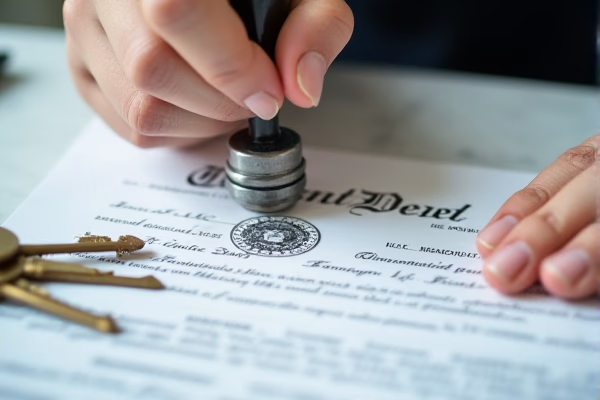
Several key life events trigger the need for a thorough estate plan review. Marriage or divorce is a primary catalyst, as it fundamentally alters your family structure and asset distribution preferences. The birth or adoption of a child or grandchild also requires adjustments to beneficiary designations and guardianship provisions. Significant changes in your financial situation, such as a substantial increase or decrease in wealth, or the purchase or sale of major assets, should also prompt a review.
Relocating to a different state, like moving from another state to San Diego, is another critical trigger. Estate laws vary significantly by jurisdiction, and your existing plan may not be valid or effective in your new location. Finally, changes in tax laws at the federal or state level can necessitate adjustments to ensure your plan remains tax-efficient.
How often should I review my estate plan?
While major life events necessitate immediate review, a general rule of thumb is to review your estate plan every three to five years, even if no significant changes have occurred. Tax laws are constantly evolving, and even seemingly minor changes can have a substantial impact on your estate. Regular review also ensures that your plan continues to reflect your current wishes and values.
It’s also important to periodically review beneficiary designations on all your accounts, including retirement plans, life insurance policies, and investment accounts. These designations often supersede your will, so ensuring they align with your overall estate plan is crucial. A coordinated estate planning structure is essential for avoiding unintended consequences.
What happens if I die without updating my estate plan?
Dying with an outdated estate plan can lead to a variety of complications. Your assets will be distributed according to your state’s intestacy laws, which may not align with your wishes. This can result in unintended beneficiaries receiving assets, or family members facing lengthy and costly probate proceedings. Furthermore, an outdated plan may not minimize estate taxes or provide for the efficient transfer of assets to your loved ones.
In California, the probate process can be particularly complex and time-consuming. Assets may be subject to court supervision, and the process can be expensive, potentially reducing the value of your estate. A well-structured estate planning framework can help avoid probate altogether, streamlining the transfer of assets and protecting your family from unnecessary stress and expense.
Can I update my estate plan myself, or do I need an attorney?
While it’s possible to make minor changes to your estate plan yourself, it’s generally advisable to consult with an experienced estate planning attorney for any significant updates. Estate planning laws are complex, and even a seemingly minor error can have unintended consequences. An attorney can ensure that your plan is legally valid, tax-efficient, and aligned with your current wishes and goals.
Furthermore, an attorney can help you navigate complex issues such as trust funding, asset retitling, and beneficiary designations. A structured estate planning representation provides peace of mind knowing that your plan is comprehensive and tailored to your specific needs.
What is trust funding, and why is it important?
Trust funding is the process of transferring ownership of your assets into your trust. Simply creating a trust is not enough; you must actively transfer ownership of your assets to the trust to realize its benefits. This involves changing the titling of your bank accounts, brokerage accounts, real estate, and other assets to reflect the trust as the owner. Without proper funding, your assets may still be subject to probate, defeating the purpose of creating the trust.
Distinguish between an Affidavit for Real Property of Small Value (<$69,625) and the AB 2016 Succession Petition. For deaths occurring on or after April 1, 2025, a primary residence up to $750,000 can bypass formal probate via a “Petition to Determine Succession,” which requires a court order (Form DE-315). To qualify, all other non-real estate assets must remain below the separate $208,850 personal property threshold.
|
Attorney Advertising, Legal Disclosure & Authorship
ATTORNEY ADVERTISING.
This content is provided for general informational and educational purposes only and does not constitute legal, financial, or tax advice.
Under the California Rules of Professional Conduct and State Bar advertising regulations, this material may be considered attorney advertising.
Reading this content does not create an attorney-client relationship or any professional advisory relationship.
Laws vary by jurisdiction and are subject to change, including recent 2026 developments under California’s AB 2016 and evolving federal estate and reporting requirements.
You should consult a qualified attorney or advisor regarding your specific circumstances before taking action.
Responsible Attorney:
Steven F. Bliss, California Attorney (Bar No. 147856).
Local Office:
San Diego Probate Law3914 Murphy Canyon Rd San Diego, CA 92123 (858) 278-2800
San Diego Probate Law is a practice location and trade name used by Steven F. Bliss, Esq., a California-licensed attorney.
About the Author & Legal Review Process
This article was researched and drafted by the Legal Editorial Team of the Law Firm of Steven F. Bliss, Esq.,
a collective of attorneys, legal writers, and paralegals dedicated to translating complex legal concepts into clear, accurate guidance.
Legal Review:
This content was reviewed and approved by Steven F. Bliss, a California-licensed attorney (Bar No. 147856).
Mr. Bliss concentrates his practice in estate planning and estate administration, advising clients on proactive planning strategies and representing fiduciaries in probate and trust administration proceedings when formal court involvement becomes necessary.
With more than 35 years of experience in California estate planning and estate administration,
Mr. Bliss focuses on structuring enforceable estate plans, guiding fiduciaries through court-supervised proceedings,
resolving creditor and notice issues, and coordinating asset management to support compliant, timely distributions and reduce fiduciary risk.
|