
Statutory Probable Cause How To Contest A Will Without Being Disinherited?

Contesting a will is a complex legal undertaking, fraught with potential pitfalls. A common concern is the enforceability of “no-contest clauses,” also known as “in terrorem” clauses. These clauses attempt to prevent beneficiaries from challenging the will by threatening disinheritance if they do so. However, California law provides a shield against such clauses when a beneficiary has “probable cause” to believe the will is invalid. An experienced wills attorney can analyze the specific facts of your case to determine if you meet this threshold. Understanding the nuances of California Probate Code is critical to protecting your rights.
A comprehensive estate planning strategy often includes careful consideration of potential will contests. While a well-drafted will can minimize the risk, it’s impossible to eliminate it entirely. A will is only one component of a complete estate plan, and failing to address issues like trust funding or beneficiary designations can create vulnerabilities.
What is “Probable Cause” in a Will Contest?
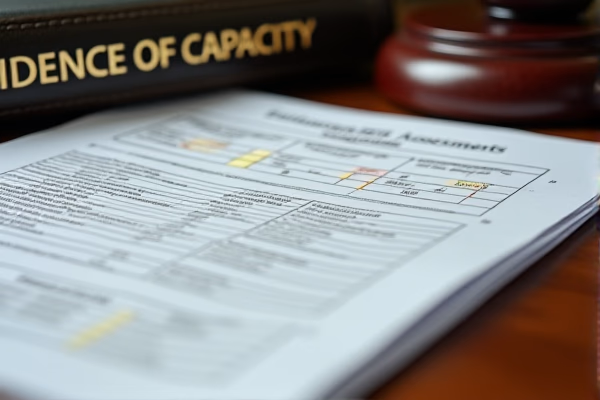
“Probable cause” doesn’t mean you’re guaranteed to win the contest. It simply means you have a reasonable basis to believe the will is invalid. This standard is lower than “proof,” which is required to actually overturn the will in court. California law, specifically Probate Code § 21311, protects beneficiaries who act in good faith based on legitimate concerns.
Common grounds for contesting a will and establishing probable cause include: improper execution (witness issues, lack of signature), lack of testamentary capacity (the testator wasn’t of sound mind), undue influence (someone coerced the testator), or fraud (the will was forged or based on false information). Even a suspicion of these issues, supported by evidence, can be enough to establish probable cause.
What Evidence is Needed to Show Probable Cause?
The evidence required to demonstrate probable cause varies depending on the specific challenge. For example, if you suspect improper execution, you might need witness testimony or affidavits stating the will wasn’t signed correctly. If you believe the testator lacked capacity, medical records, witness statements about their mental state, and even prior legal documents can be helpful.
Gathering this evidence can be time-sensitive, so it’s crucial to act quickly. A structured testamentary drafting strategy can help minimize these risks, but even the best-drafted wills are subject to challenge.
Can a No-Contest Clause Be Enforced if I Have Probable Cause?
No. If you successfully demonstrate probable cause, the no-contest clause is unenforceable. You can contest the will without risking your inheritance. However, it’s important to note that the burden of proof lies with the contestant. You must convince the court that you had a reasonable basis for your challenge.
California’s “Four-Prong Test” for undue influence, as outlined in WIC § 15610.70 and Probate Code § 21380, is often central to these cases.
What Happens if I Contest a Will Without Probable Cause?
If you contest a will without probable cause, the no-contest clause will likely be enforced, and you will forfeit your inheritance. This can be a significant financial loss, especially if you’ve already incurred legal expenses.
This is why consulting with an attorney drafting wills under California Probate Code is essential before initiating a contest. They can assess your case, advise you on the strength of your evidence, and help you weigh the risks and benefits of proceeding.
What Role Does the Court Play in a Will Contest?
The court ultimately decides whether the will is valid. They will review the evidence presented by both sides and make a determination based on the applicable law. This process can be lengthy and complex, often involving depositions, expert testimony, and court hearings.
As an estate planning attorney & CPA with over 35 years of experience in San Diego, California, I’ve seen firsthand the devastating consequences of poorly executed wills and the importance of careful planning.
What is the Difference Between Challenging the Entire Will and a Specific Provision?
You can challenge the entire will, arguing it’s invalid in its entirety, or you can challenge a specific provision, such as a bequest to a particular beneficiary. The standard for probable cause may differ depending on the scope of the challenge. A full will contest requires a stronger showing of evidence than challenging a single clause.
A CPA’s expertise is invaluable in these situations, particularly when assessing the tax implications of different outcomes. For example, a change in beneficiaries can significantly impact the step-up in basis and capital gains taxes owed by the estate.
How Long Do I Have to Contest a Will in California?
California law imposes strict deadlines for contesting a will. Generally, you must file your contest within 120 days of the will being admitted to probate. Failing to meet this deadline can bar your claim.
It’s crucial to act promptly and consult with an attorney as soon as possible to ensure you don’t miss any critical deadlines. The courts in San Diego are particularly strict about adhering to these timelines.
What Costs are Involved in Contesting a Will?
Contesting a will can be expensive. Costs include attorney’s fees, court filing fees, expert witness fees (handwriting analysis, medical evaluations), and deposition costs. The losing party may be required to pay some of the winning party’s expenses.
A CPA can help you understand the potential tax consequences of a successful or unsuccessful contest, which can further impact the overall cost.
What if the Will Was Signed Before I Was Born?
The age of the will doesn’t necessarily invalidate a contest. However, it may impact the availability of evidence. For example, witnesses may be deceased or have difficulty recalling events from many years ago.
Regardless of the will’s age, you still need to establish probable cause to contest it without risking disinheritance.
What Happens if There Are Multiple Beneficiaries Contesting the Will?
Multiple beneficiaries can contest a will jointly. However, each beneficiary is still responsible for establishing their own probable cause.
Coordinating the legal strategy and sharing information can be beneficial in these situations.
|
Attorney Advertising, Legal Disclosure & Authorship
ATTORNEY ADVERTISING.
This content is provided for general informational and educational purposes only and does not constitute legal, financial, or tax advice.
Under the California Rules of Professional Conduct and State Bar advertising regulations, this material may be considered attorney advertising.
Reading this content does not create an attorney-client relationship or any professional advisory relationship.
Laws vary by jurisdiction and are subject to change, including recent 2026 developments under California’s AB 2016 and evolving federal estate and reporting requirements.
You should consult a qualified attorney or advisor regarding your specific circumstances before taking action.
Responsible Attorney:
Steven F. Bliss, California Attorney (Bar No. 147856).
Local Office:
San Diego Probate Law3914 Murphy Canyon Rd San Diego, CA 92123 (858) 278-2800
San Diego Probate Law is a practice location and trade name used by Steven F. Bliss, Esq., a California-licensed attorney.
About the Author & Legal Review Process
This article was researched and drafted by the Legal Editorial Team of the Law Firm of Steven F. Bliss, Esq.,
a collective of attorneys, legal writers, and paralegals dedicated to translating complex legal concepts into clear, accurate guidance.
Legal Review:
This content was reviewed and approved by Steven F. Bliss, a California-licensed attorney (Bar No. 147856).
Mr. Bliss concentrates his practice in estate planning and estate administration, advising clients on proactive planning strategies and representing fiduciaries in probate and trust administration proceedings when formal court involvement becomes necessary.
With more than 35 years of experience in California estate planning and estate administration,
Mr. Bliss focuses on structuring enforceable estate plans, guiding fiduciaries through court-supervised proceedings,
resolving creditor and notice issues, and coordinating asset management to support compliant, timely distributions and reduce fiduciary risk.
|