
Under California Probate Code Section 15202, a trust is not legally created until it is funded with property (the “res”). The “how” of alignment requires a formal transfer of title; for real property, this necessitates a recorded deed under Section 15206, and for personal property, a written assignment or change of account title. Fiduciary obligations under Section 16006 mandate that a trustee “take reasonable steps to take and keep control of and to preserve the trust property.” Evidentiary standards for “unfunded” assets are governed by the Heggstad Doctrine and Probate Code Section 850(a)(3), which allow the court to confirm property as a trust asset if the petitioner provides clear evidence of the settlor’s intent to include the property, such as a comprehensive Schedule A. Enforcement logic dictates that any asset not properly aligned—either by title or judicial decree—remains outside the trust’s jurisdiction, potentially triggering a formal probate under Section 7000. For high-net-worth estates, failure to align beneficiary designations on non-probate assets like IRAs can result in unintended tax acceleration or the loss of the marital deduction.
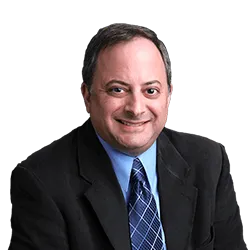
Trust funding is where planning becomes enforceable control: the trust instrument is not the finish line, asset alignment is. California recognizes transfers to a trustee and other creation pathways under Prob. Code § 15200, and it also requires that trust property be identifiable under Prob. Code § 15202. When title, registrations, and beneficiary designations match the trust’s governance, authority questions tend to end quickly.
How I build funding discipline so the trust controls what it is supposed to control

I have guided San Diego families for more than 35 years, and the same quiet failure shows up in Rancho Santa Fe and Mission Hills alike: the trust is signed, but the assets never actually moved. Under California Law, a trustee’s authority becomes practical only when the property is identifiable and aligned, which is why my first pass is always a funding map tied to deeds, account titles, and business documents under Prob. Code § 15202. As a CPA, I also focus on basis awareness and valuation discipline because a rushed retitling after the fact can create avoidable capital gains exposure and documentation gaps at the same time.
Strategic Insight (San Diego): A frequent local pressure point is timing around real property—HOA deadlines, insurance renewals, and repair access while a home in La Jolla is vacant or being renovated. When assets are not aligned, families often overshare private documents to “prove” authority, and that is backwards. A better strategy is controlled proof: align the deed and the trustee’s authority trail early so, if a dispute arises, the record speaks cleanly without expanding the audience.
Why San Diego realities and California Law change what “funded” actually means
In San Diego County, funding mistakes tend to surface when you least want visibility: during refinancing, sale negotiations, or a sudden need for someone to sign with authority while privacy matters. California Law is clear that a trust needs identifiable property for real control, and that standard is anchored in Prob. Code § 15202. This is general information under California Law; specific facts change strategy.
- Real property retitled inconsistently with the trust’s name or trustee capacity, creating avoidable title questions.
- Brokerage and bank accounts left in individual names, with “intent” substituted for actual registration.
- Beneficiary designations that override the trust plan, creating distributions that do not match governance.
- Business interests transferred informally without the operating agreement’s required steps or consents.
- Out-of-date schedules of assets that cannot be reconciled to statements and deeds when a deadline hits.
The fiduciary risk is not only delay; it is exposure. If a transfer is challenged, the trustee must be able to show what was owned, what was transferred, and when authority attached, and California’s trust rules allow court involvement to interpret and confirm trust administration if needed under Prob. Code § 17200. A clean funding record reduces the room for “he said/she said” and prevents last-minute document dumps that erode discretion.
My CPA advantage shows up in the details that usually get skipped: basis tracking, valuation support for closely held interests, and recognition of when a change in title might have downstream tax consequences. Funding is not a single event; it is governance maintenance, and disciplined records are what keep future decisions defendable rather than reactive.
The Immediate 5: the questions that tell me whether your trust is funded, or only signed
When we review funding and asset alignment, I begin with five intake questions that reveal whether the plan is operational. These questions focus on proof, timing, and whether a third party can recognize trustee authority without confusion. The goal is controlled clarity: align what you own with how your trust is supposed to function.
Which assets are supposed to be controlled by the trust, and where is the current proof of title?
I start with an inventory tied to documents, not memory: recorded deeds for San Diego real property, current statements for accounts, and governing documents for entities. The focal point is proof that a third party can verify—how each asset is titled today and whether that title matches the trust and trustee capacity.
What was actually transferred to the trustee, and what is merely listed or “intended”?
A schedule of assets is helpful only if it matches real-world ownership. California requires trust property to be identifiable under Prob. Code § 15202, so I compare schedules to deeds, account registrations, assignments, and endorsements to confirm that control moved, not just paperwork.
Do beneficiary designations and pay-on-death instructions align with the trust’s distribution plan?
Funding is not only retitling; it is coordination. I review beneficiaries on retirement accounts, life insurance, and transfer-on-death registrations because those designations can bypass the trust and create a distribution outcome that undermines governance, privacy, and the intended timing of control.
Who will need to accept or recognize trustee authority, and what are their documentation thresholds?
Different institutions have different thresholds, especially local financial institutions that require a clean chain of authority before allowing changes, wires, or signature authority. I plan for discretion by organizing what is necessary to prove authority while minimizing disclosure, so your privacy is preserved even under time pressure.
What changed after the trust was signed that likely broke alignment?
The most common breakpoints are predictable: refinancing, new accounts, new purchases, entity reorganizations, and changes in marital property posture. I look for these triggers and then rebuild alignment through a controlled funding checklist so that the trust remains operational as life changes, not just “valid on paper.”

Funding is the bridge between privacy and functionality: the trust should control what it needs to control without inviting unnecessary disclosure. In San Diego, deadlines tend to come from carrying costs, access delays, and transaction timing, so I build an asset-alignment file that can satisfy a lender or bank quickly while keeping family details out of circulation. The goal is consistent title, consistent authority, and a record that does not need explaining.
- Deed and account title alignment in trustee capacity
- Entity interest assignments supported by governance documents
- Beneficiary coordination to prevent unintended bypass
Procedural realities that keep funding problems from becoming fiduciary problems
Evidence & Documentation Discipline
Funding disputes are usually evidence disputes in disguise: who owned what, when control changed, and whether the trustee can prove authority without stretching. California’s trust property requirement under Prob. Code § 15202 is the anchor I use to keep the record tight and recognizable.
- Transfer documents vs actual control/ownership
- Valuation support vs later audit/challenge risk
- Timeline consistency for planning vs creditor/liability exposure
- Tie to California compliance and defensibility
If funding is later questioned, the practical safeguard is a file that reconciles schedules to real documents and avoids “gap periods” that invite narratives. When disputes turn on proof and records, admissible business records posture under Evid. Code § 1271 becomes part of the defensibility conversation.
Negotiation vs Transaction-Challenge Reality
Once a transaction is challenged, leverage follows clarity: the party with clean title history, dated assignments, and coherent trustee authority can move faster and control the narrative. If judicial review becomes necessary to confirm trust administration or interpret authority, petitions may be brought under Prob. Code § 17200, which is why I treat funding documentation as a risk-control file, not a housekeeping file.
- What changes once a transaction is challenged
- Documentation, timing, valuation, compliance posture
- Procedural reality only
Complex Scenarios
Digital assets and cryptocurrency access, no-contest clause boundaries, and community property control issues often intersect with funding because “control” is not always ownership. Where this becomes relevant is when a spouse assumes community property gives unilateral authority, while the trust and marital property rules under Fam. Code § 1100 still require disciplined documentation and consent posture.
For digital accounts and crypto access, the trustee’s ability to lawfully access and marshal what you own must be planned in advance, not improvised, and California’s fiduciary access framework under Prob. Code § 870 is part of that alignment. No-contest clauses can limit certain challenges, but their enforceability boundaries under Prob. Code § 21311 do not fix unfunded assets, so the safest posture is to make alignment boring and provable.
Lived experiences from clients who wanted alignment without exposure
Larry W.
“We thought our trust was complete, but Steve showed us what was still outside it and why that mattered. He organized the funding steps, coordinated our accounts and property paperwork, and reduced the confusion with our bank without sacrificing privacy. The outcome was control—we could act quickly without dumping personal documents everywhere.”
Holly C.
“Our obstacle was constant change: new purchases, new accounts, and a refinance that broke the alignment we had started. Steve rebuilt the asset map, tightened the documentation, and made the plan feel stable again. The practical result was clarity and less conflict—everyone understood what the trust controlled and what it didn’t.”
California statutory framework and legal authority referenced on this page
If you want a trust that functions with privacy and administrative control in San Diego, focus first on a documented funding map—deeds, registrations, beneficiary coordination, and a clean authority trail—so your plan stays aligned before a deadline forces a rushed fix.
|
Attorney Advertising, Legal Disclosure & Authorship
ATTORNEY ADVERTISING.
This content is provided for general informational and educational purposes only and does not constitute legal, financial, or tax advice.
Under the California Rules of Professional Conduct and State Bar advertising regulations, this material may be considered attorney advertising.
Reading this content does not create an attorney-client relationship or any professional advisory relationship.
Laws vary by jurisdiction and are subject to change, including recent 2026 developments under California’s AB 2016 and evolving federal estate and reporting requirements.
You should consult a qualified attorney or advisor regarding your specific circumstances before taking action.
Responsible Attorney:
Steven F. Bliss, California Attorney (Bar No. 147856).
Local Office:
San Diego Probate Law3914 Murphy Canyon Rd San Diego, CA 92123 (858) 278-2800
San Diego Probate Law is a practice location and trade name used by Steven F. Bliss, Esq., a California-licensed attorney.
About the Author & Legal Review Process
This article was researched and drafted by the Legal Editorial Team of the Law Firm of Steven F. Bliss, Esq.,
a collective of attorneys, legal writers, and paralegals dedicated to translating complex legal concepts into clear, accurate guidance.
Legal Review:
This content was reviewed and approved by Steven F. Bliss, a California-licensed attorney (Bar No. 147856).
Mr. Bliss concentrates his practice in estate planning and estate administration, advising clients on proactive planning strategies and representing fiduciaries in probate and trust administration proceedings when formal court involvement becomes necessary.
With more than 35 years of experience in California estate planning and estate administration,
Mr. Bliss focuses on structuring enforceable estate plans, guiding fiduciaries through court-supervised proceedings,
resolving creditor and notice issues, and coordinating asset management to support compliant, timely distributions and reduce fiduciary risk.
|