
Under California Probate Code Section 6100, an individual must possess specific testamentary capacity to execute a valid Last Will and Testament. This includes understanding the nature of the testamentary act, the extent of one’s property, and the relationship to living descendants. Without a clearly defined Will, your estate may be subject to intestate succession, where California law dictates the distribution of assets regardless of your personal intentions or family dynamics.
Last Will & Testament Attorney in San Diego: what is the one rule you must follow under California Law?
Under California Law, a will is only as strong as its execution. The one rule is this: the will must be executed in strict compliance with statutory formalities and drafted to match the real-world way your assets are owned. Legal Basis: Prob. Code § 6110.
- Execution errors create avoidable disputes over validity.
- Asset-ownership mismatches create confusion even when the will is valid.
- For higher-value families, drafting is governance: clarity, control, and defensible administration.
How I structure Last Wills for high-value San Diego families

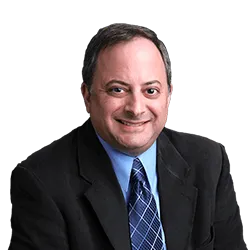
I’m Steve Bliss, an Estate Planning Attorney and CPA in San Diego County, and I’ve spent more than 35 years building wills that hold up under California Law when family dynamics, significant assets, and privacy expectations require precision.
In one anonymized San Diego matter, a successful business owner had a valid will, but the plan failed in practice: beneficiary designations did one thing, ownership did another, and the will language didn’t anticipate the friction. If probate becomes necessary, that mismatch can place the estate into a court-driven timeline in the San Diego Superior Court. Legal Basis: Prob. Code § 8000.
My CPA discipline shows up early: I draft with valuation coherence in mind, so basis planning and potential capital gains exposure are not an afterthought when assets must be administered or sold.
Strategic Insight (San Diego): When a will is likely to be scrutinized, the winning move is almost always “pre-execution discipline.” Before signing, I confirm the execution sequence, witness positioning, and clean document control so later challenges have less oxygen. If the estate ends up in the San Diego Superior Court, that early discipline tends to keep the first hearing procedural rather than adversarial. Legal Basis: Prob. Code § 6110.
Why California Law and San Diego realities materially change will planning
A will is a California Law instrument that often becomes visible to others only when the family can least afford uncertainty. San Diego County families frequently hold a mix of real property, business interests, and financial accounts, which means small drafting ambiguities can become expensive administrative friction. Legal Basis: Prob. Code § 6110.
If a will must be admitted to probate, the timeline becomes procedural and court-driven. When a dispute arises, the venue reality in San Diego is simple: the record matters more than the story. Legal Basis: Prob. Code § 8000.
This is general information under California Law; specific facts change strategy.
Fiduciary exposure: where wills create risk if drafting is imprecise
A will is not only about who receives assets. It is also about who is placed in control as executor and what standards that executor must meet when decisions are later questioned. A clean will reduces pressure on the fiduciary by reducing ambiguity and tightening the record. Legal Basis: Prob. Code § 8400.
- Execution formalities that invite a validity challenge later. Legal Basis: Prob. Code § 6110.
- Ambiguous distribution clauses that turn “intent” into interpretation fights.
- Executor appointments without practical governance guidance for administration decisions.
- Community property assumptions that do not match the legal characterization of the asset. Legal Basis: Fam. Code § 760.
- Informal amendments instead of properly executed changes that preserve a clean record.
- Digital asset access gaps that delay control of accounts and records. Legal Basis: Prob. Code § 870.
When disputes do occur, executor removal proceedings can become a serious leverage point. A will that anticipates governance and documentation discipline tends to reduce that risk. Legal Basis: Prob. Code § 8502.
Tax and accounting posture: why wills should be drafted with valuation discipline
In higher-value planning, the will should not create a tax surprise simply because the drafting ignored how assets will be valued, administered, and potentially sold. My CPA approach is to draft with valuation coherence so basis planning and capital gains exposure remain predictable across the plan.
If probate becomes necessary, inventory and appraisal discipline becomes part of the record that beneficiaries measure for “fairness.” Drafting that anticipates documentation and valuation standards reduces friction later. Legal Basis: Prob. Code § 8800.
Five Immediate Questions San Diego families ask about wills

Is a handwritten will valid in California?
A holographic will may be valid if the material provisions and the signature are in the testator’s handwriting, but the risk is dispute over authenticity and intent when families disagree. Legal Basis: Prob. Code § 6111.
FAQ Answer (Plain Text): A holographic will may be valid if the material provisions and the signature are in the testator’s handwriting, but the risk is dispute over authenticity and intent when families disagree.
What happens if my will is not properly witnessed?
If a will fails execution formalities, it can be challenged or treated as invalid, which often shifts the estate into a more expensive and contested posture. Legal Basis: Prob. Code § 6110.
FAQ Answer (Plain Text): If a will fails execution formalities, it can be challenged or treated as invalid, which often shifts the estate into a more expensive and contested posture.
Does a will avoid probate in San Diego?
No. A will directs how probate proceeds; it does not avoid probate. If probate is required, the estate is administered through the San Diego Superior Court under a court-driven timeline. Legal Basis: Prob. Code § 8000.
FAQ Answer (Plain Text): No. A will directs how probate proceeds; it does not avoid probate. If probate is required, the estate is administered through the San Diego Superior Court under a court-driven timeline.
What is the duty to lodge the original will after death?
California Law imposes a duty on the custodian of a will to lodge it with the appropriate court after learning of the death, which matters because missing originals often trigger delay and suspicion. Legal Basis: Prob. Code § 8200.
FAQ Answer (Plain Text): California Law imposes a duty on the custodian of a will to lodge it with the appropriate court after learning of the death, which matters because missing originals often trigger delay and suspicion.
How does community property affect what I can leave by will?
Community property rules can limit what one spouse can dispose of by will, so higher-value San Diego planning often requires careful characterization and coordinated titling. Legal Basis: Fam. Code § 760.
FAQ Answer (Plain Text): Community property rules can limit what one spouse can dispose of by will, so higher-value San Diego planning often requires careful characterization and coordinated titling.
If your goal is to avoid the kind of cost drift Michael’s family faced, the work is not “a document.” The work is a controlled execution process, coordinated ownership alignment, and governance planning that holds up when others are stressed and timelines matter.
Procedural realities that determine whether a will stays controlled or becomes expensive
A) Evidence and documentation discipline in will planning
In will disputes, evidence is rarely a single document. It is the execution record, document control, timing, and whether the plan matches how assets are actually held. Legal Basis: Prob. Code § 6110.
- Drafted will language vs the signed execution package: what controls is what was properly executed. Legal Basis: Prob. Code § 6110.
- Trust paperwork vs asset titling and beneficiary designations: integration determines whether the will is doing real work or only filling gaps.
- Timeline consistency for capacity, amendments, and execution: clean timing reduces openings for pressure narratives.
- California procedure reality: if probate is required, the petition process and record quality shape the timeline. Legal Basis: Prob. Code § 8000.
B) Negotiation vs litigation reality when families disagree
Once a dispute is framed as a court issue, the center of gravity shifts to procedure, burden, and record quality. In San Diego Superior Court, weak execution records and inconsistent document control can quickly become expensive leverage points. Legal Basis: Prob. Code § 8000.
- What materially changes if probate is filed: the timeline becomes court-driven and documentation becomes the currency of credibility. Legal Basis: Prob. Code § 8000.
- Discovery posture and litigation risk: ambiguity turns “intent” into contested facts that must be proven, not assumed.
- Procedural reality only: the cleaner the execution and document control, the less room there is for avoidable contests. Legal Basis: Prob. Code § 6110.
C) Complex scenarios that high-value San Diego families should anticipate
In higher-value planning, the friction points are rarely dramatic. They are procedural and administrative: access, control, enforceability, and characterization. The goal is to draft so those points are governed in advance rather than negotiated later.
- Digital assets and cryptocurrency: successors need lawful access and a plan that matches fiduciary authority and provider requirements. Legal Basis: Prob. Code § 870.
- No-contest clause boundaries: enforceability in California is rule-driven, so drafting must be evaluated within the statutory framework rather than assumed. Legal Basis: Prob. Code § 21310 and Prob. Code § 21311.
- Community property and spousal rights: characterization can change distribution assumptions and should be addressed with coordinated planning. Legal Basis: Fam. Code § 760.
Lived experiences
Jason A.
“We had a prior will that looked fine on paper, but Steve found execution and coordination gaps we never would have seen. The outcome was a plan that feels controlled, private, and clear for our family.”
Amy Q.
“Steve’s CPA discipline changed the process. He tied drafting decisions to valuation and tax posture in a calm, practical way. The result was clarity we could actually trust.”
California statutory framework & legal authority
|
Attorney Advertising, Legal Disclosure & Authorship
ATTORNEY ADVERTISING.
This content is provided for general informational and educational purposes only and does not constitute legal, financial, or tax advice.
Under the California Rules of Professional Conduct and State Bar advertising regulations, this material may be considered attorney advertising.
Reading this content does not create an attorney-client relationship or any professional advisory relationship.
Laws vary by jurisdiction and are subject to change, including recent 2026 developments under California’s AB 2016 and evolving federal estate and reporting requirements.
You should consult a qualified attorney or advisor regarding your specific circumstances before taking action.
Responsible Attorney:
Steven F. Bliss, California Attorney (Bar No. 147856).
Local Office:
San Diego Probate Law3914 Murphy Canyon Rd San Diego, CA 92123 (858) 278-2800
San Diego Probate Law is a practice location and trade name used by Steven F. Bliss, Esq., a California-licensed attorney.
About the Author & Legal Review Process
This article was researched and drafted by the Legal Editorial Team of the Law Firm of Steven F. Bliss, Esq.,
a collective of attorneys, legal writers, and paralegals dedicated to translating complex legal concepts into clear, accurate guidance.
Legal Review:
This content was reviewed and approved by Steven F. Bliss, a California-licensed attorney (Bar No. 147856).
Mr. Bliss concentrates his practice in estate planning and estate administration, advising clients on proactive planning strategies and representing fiduciaries in probate and trust administration proceedings when formal court involvement becomes necessary.
With more than 35 years of experience in California estate planning and estate administration,
Mr. Bliss focuses on structuring enforceable estate plans, guiding fiduciaries through court-supervised proceedings,
resolving creditor and notice issues, and coordinating asset management to support compliant, timely distributions and reduce fiduciary risk.
|